
Thursday night’s Knox County GOP mayoral debate did not turn on a dramatic exchange or a viral moment. No sharp insult. No defining clash. The stage felt orderly, almost procedural. Three candidates. Familiar questions. Predictable answers.
Then the budget came up.
Not the abstract idea of a budget. Not a line about fiscal responsibility. A number. Concrete. Heavy.
Roughly one billion dollars in total county spending. Roughly seven hundred million of that tied to the school system.
The moderator did not need to editorialize. The number carried its own gravity. Anyone who has managed an organization, a household, or a business understands the implication. When seventy cents of every dollar flows into one channel, that channel defines the system.
The candidates responded quickly.
Two candidates, in particular, converged on the same position. The school portion of the budget sits beyond the reach of the mayor. State requirements. Legal obligations. Separate governance. The message came wrapped in the language of responsibility. A mayor must respect the limits of the office.
The third candidate did not meaningfully challenge the premise.
The exchange ended as quickly as it began. The room accepted the answer. The conversation moved on.
That moment, more than any other, defined the debate.
A Question That Ended Too Soon
Nearly two decades earlier, under a different set of lights, Barack Obama faced a different kind of question. The setting was the Saddleback Church Forum. The audience expected more than policy. The audience expected moral clarity.

The question turned to when a human life acquires rights.
Obama paused. The pause mattered. The answer followed.
“That is above my pay grade.”
The remark sounded careful. The remark sounded humble. The remark avoided false precision on a question that has resisted consensus across centuries.
The remark also ended the conversation.
A hard question entered the domain of leadership and left without transformation. No reframing. No translation into policy. No guidance for those who must act within the law.
A leader does not need to resolve a philosophical question that has divided civilizations. A leader must take that question and convert it into direction that fits within the structure of governance.
The boundary appeared. The answer stopped at the boundary. Obama failed the leadership moment.
A Scenario That Refused to Hold
By contrast, we have Captain Kirk.
In Star Trek, cadets face a simulation designed to teach a brutal lesson. The Kobayashi Maru presents a distress call. Rescue leads to destruction. Withdrawal abandons the innocent. The outcome remains fixed. Loss arrives either way.

Cadets enter with confidence. Cadets leave with acceptance. Some situations cannot be won.
James T. Kirk refused that conclusion. He did not approach the scenario as a test of endurance. He approached the scenario as a construct. He examined the structure that produced the outcome and altered that structure.
The next run produced a different result.
The lesson does not rest in defiance for its own sake. The lesson rests in perception. A “no-win” scenario often reflects a design choice, not a law of nature.
A leader who accepts the design inherits the loss embedded within it.
A City That Found Leverage
New York City in the early 1990s presented a different challenge. At major intersections, drivers encountered men with buckets and squeegees. The exchange played out daily. A quick wash. An outstretched hand. An implied demand.
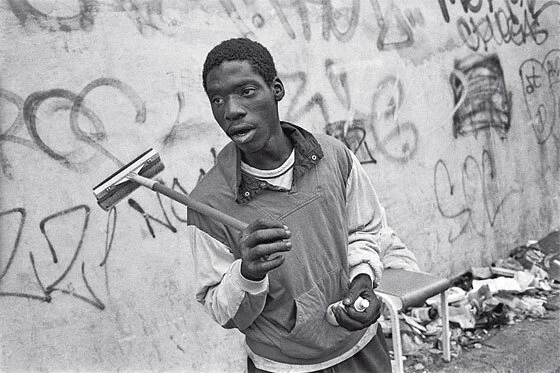
The practice lived in a gray zone. Annoying. Intimidating to some. Difficult to prosecute cleanly under a single statute.
The city could have accepted the condition as part of urban life.
Under Rudy Giuliani, the city chose another path. Officials looked not for a perfect law but for any lawful point of leverage. The act of stepping into traffic created violations. Jaywalking laws applied. Additional minor offenses created entry points for enforcement.
No sweeping reform. No new doctrine. A shift in angle.
The intersections changed. The behavior receded.
Constraint remained. Options expanded.
The Knox County Question
Thursday night’s debate returned to the same crossroads.
A large number appeared. A boundary followed. The candidates treated that boundary as final.
The structure of school funding carries real constraints. State mandates define obligations. A mayor cannot erase those obligations with a speech. A mayor cannot redirect those dollars with a simple vote.
Those facts deserve acknowledgment.
Those facts do not end the inquiry.
A mayor does, however, have a choice. They can throw their arms up and declare, like Obama, “Above my pay grade.” Or they can buckle down like Kirk and Guilianni and reframe the Kobayashi Maru.
A mayor can examine how funds flow through the system. A mayor can measure outcomes against investment. A mayor can identify administrative layers that accumulate cost. A mayor can explore shared services between county and school operations. A mayor can engage the state over time to expand flexibility. A mayor can apply pressure where pressure yields change. A mayor can thump on the county bully pulpit.
Each step requires effort. Each step requires persistence. Each step begins with a refusal to treat the largest portion of the budget as a closed question.
The Difference That Matters
Public office imposes limits. Law, structure, and precedent narrow the field.
Within that field, a choice emerges.
One path accepts the boundary and adjusts expectations.
One path tests the boundary and searches for movement.
The Knox County debate revealed which instinct comes first.
The office will reveal which instinct governs.
Closing
The next mayor will inherit the same ledger. The same billion-dollar budget. The same seven hundred million tied to schools.
The number will not change on day one.
The posture can.
A leader can stand before that number and declare the work complete.
A leader can stand before that number and begin asking better questions.
Knox County does not need a mayor who denies constraints.
Knox County needs a mayor who refuses to stop at them.
Author’s Note: Portions of this essay were developed with the assistance of ChatGPT. Any particularly clear sentences should be attributed to the machine. Any errors in judgment remain entirely human.