
[ Intro | Watch | About | TakeAways | Formats | Topics | Bio | Form ]
Why Politics Is So Hate-Filled
A civic talk on anger, media, faction, and the forgotten art of compromise
Modern American politics did not become hate-filled by accident. The anger has causes. The outrage has incentives. The noise has structure.
In this engaging civic presentation, David L. Page, Ph.D., explores why American politics increasingly rewards outrage, tribal identity, and performative conflict instead of compromise, coalition-building, and constitutional restraint. Drawing from James Madison, American history, political science, media theory, and cognitive psychology, Page argues that modern Americans often mistake politics for a search for one correct answer. Politics works differently. At its best, politics is the hard work of negotiating competing interests inside a large and divided republic.
The talk is designed for civic clubs, community groups, libraries, churches, political organizations, book clubs, leadership programs, and audiences concerned about the rising temperature of American public life.
We can survive polarization. We cannot survive hatred.
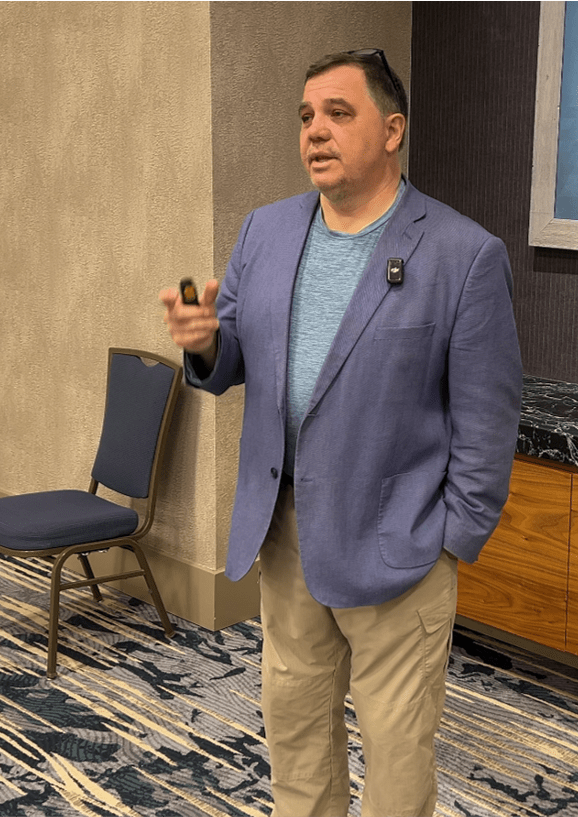
Watch a Recent Presentation
Watch a presentation to get a sense of the tone, topic, and style of the talk.
About the Talk
Why Politics Is So Hate-Filled explains how American politics came to reward anger so effectively. The presentation begins with a simple question many Americans now ask quietly, loudly, or reluctantly: why does politics feel so personal, so hostile, and so exhausting?
The answer is not merely bad manners. Modern political hatred grows from a combination of institutional incentives, media fragmentation, primary election dynamics, social identity, and the natural human tendency to sort the world into friends and enemies. Madison understood the danger. The Founders did not expect Americans to become angels. They designed a constitutional system to slow passion, refine public judgment, and force competing factions into negotiation.
That system still matters.
Page’s presentation does not ask audiences to abandon conviction. The talk asks citizens to understand why democratic energy must be channeled through institutions capable of turning conflict into governance. In a republic, the goal is not to eliminate disagreement. The goal is to keep disagreement from becoming hatred.
What Audiences Will Take Away
- Why modern politics often rewards outrage more than persuasion
- How media and social platforms amplify conflict and identity-based anger
- Why party primaries often elevate the most motivated and intense voters
- What James Madison understood about faction, passion, and republican government
- Why compromise is not weakness, but a necessary discipline in a large republic
- How citizens can think more clearly about political disagreement without surrendering their convictions
Presentation Formats
- Keynote or Civic Talk: 30–45 minutes, followed by audience questions.
- Lunch or Breakfast Program: 20–30 minutes, designed for Rotary, Kiwanis, Lions, Civitan, church groups, and similar civic organizations.
- Panel or Moderated Conversation: A flexible format for conferences, libraries, schools, civic forums, or leadership programs.
- Book Event or Author Talk: A presentation connected to David’s books, The Art of the Compromise and More Republic, Less Cowbell.
Speaking Topics
- Why Politics Is So Hate-Filled: A civic explanation of anger, faction, media incentives, primary elections, and the breakdown of compromise in American public life.
- More Republic, Less Cowbell: A talk on why modern democracy often produces more noise than wisdom, and why American republican institutions still matter.
- The Art of the Compromise: A historically grounded presentation on America’s constitutional inheritance, political conflict, and the discipline required to hold a divided republic together.
- Madison, Media, and Modern Anger: A focused talk connecting Federalist No. 10, modern media systems, and the psychological incentives that drive political hostility.
- Why Primaries Changed American Politics: A discussion of how party primary reforms reshaped American politics by empowering highly motivated voters and weakening older coalition-building structures.
- Can America Still Compromise? A hopeful but realistic civic talk about institutional design, political humility, and the habits needed to sustain self-government.
About David L. Page
David L. Page, Ph.D., is a Knoxville-based author and speaker whose work explores American politics, democratic culture, and the challenge of holding together a large and divided republic. His books, The Art of the Compromise and More Republic, Less Cowbell, examine polarization, faction, media, and governance through the lens of history, political science, and civic structure, making the case that healthier systems matter more than louder outrage.
By day, Page works as a research scientist specializing in computer vision and 3D imaging, with a doctorate in Electrical Engineering from the University of Tennessee. His technical career spans more than two decades and includes dozens of publications in international journals and conferences, though he remains mildly suspicious that at least a few were cited out of professional courtesy.
Page lives in Knoxville with his wife, Lisa, and their daughter, Grace, who continue to tolerate both his writing and his opinions.
Invite Dave to Speak
David is available for civic clubs, community organizations, libraries, churches, political groups, book events, panel discussions, leadership programs, podcasts, and public forums.
To inquire about availability, please use the form below.

For direct inquiries, email: dave@warpedminds.io
The Republic Still Needs Citizens
America does not need citizens who agree on everything. A large republic cannot be built from perfect agreement. America needs citizens capable of disagreement without contempt, conviction without hatred, and argument without surrendering the possibility of compromise.
That discipline is not easy.
It never has been.