Klein Gets the Diagnosis Right—but Not the Cure
★★★★☆ (4/5)
Ezra Klein’s Why We’re Polarized is an important book and an important read for anyone trying to understand the present state of American politics. Klein does not treat polarization as merely a matter of bad manners, mean tweets, cable news outrage, or one uniquely disruptive politician. He sees something deeper and more troubling: a political system in which identity, party, media, institutions, and incentives now reinforce one another.
On that diagnosis, Klein is often right.
His central insight is that American politics has become less about ordinary policy disagreement and more about identity. Party affiliation now overlaps with religion, race, education, geography, media habits, cultural taste, and even one’s sense of moral standing in the country. When political parties become containers for nearly every other social identity, ordinary disagreement becomes harder to manage. Losing an election no longer feels like losing a contest over tax rates or regulatory policy. It feels like one’s whole way of life has been judged, rejected, or threatened.
That is a powerful diagnosis of our moment.
Klein also rightly observes that the American constitutional system was not built for this kind of politics. Our system depends on compromise. The separation of powers, checks and balances, bicameralism, federalism, staggered elections, and judicial review all assume that governing requires negotiation across institutions. The Constitution does not make swift majoritarian action easy. It slows power down. It divides power. It forces ambition to counter ambition. It asks political actors to bargain.
That design can work when parties are loose coalitions with overlapping interests. It can even work when disagreement is sharp but not existential. But when the parties become deeply sorted, culturally distinct, and mutually hostile, the same system that once forced compromise can produce deadlock. Klein sees that clearly. Our institutions demand compromise at the very moment when our political incentives punish compromise.
That is the strongest part of his book.
But Klein’s diagnosis is stronger than his cure.
The Parliamentary Temptation
One common temptation in conversations about polarization is to look across the Atlantic and imagine that European-style parliamentary systems, often paired with proportional representation, offer a cleaner solution. If our system deadlocks under polarization, perhaps the answer is to become more parliamentary. Let voters sort into multiple parties. Let coalitions form after elections. Let governing majorities act. Let accountability become clearer.
There is something attractive about that argument. Parliamentary systems can channel polarization differently. Proportional representation gives dissident factions a party of their own rather than forcing them into one of two broad coalitions. Coalition governments can make bargaining more visible. Voters can watch parties negotiate openly instead of watching two major parties fight across a system of veto points.
But the comparison misleads if we assume Europe has solved polarization. It has not. European states are also wrestling with populism, party fragmentation, distrust of institutions, immigration conflict, cultural backlash, and hostility toward established parties. Proportional representation has not made polarization disappear. In some cases, it has simply given polarization more parties through which to express itself.
The deeper question is not whether one system avoids polarization. No serious political system does. The question is where compromise is supposed to happen.
In parliamentary systems with proportional representation, compromise often happens after the election, when parties negotiate governing coalitions. In the American system, compromise is supposed to happen earlier and more broadly. Our two major parties are not merely election machines. At their best, they are large, unruly, uncomfortable coalitions that force negotiation before governing power is won. The American two-party system requires factions to bargain inside the parties, not only between parties after an election.
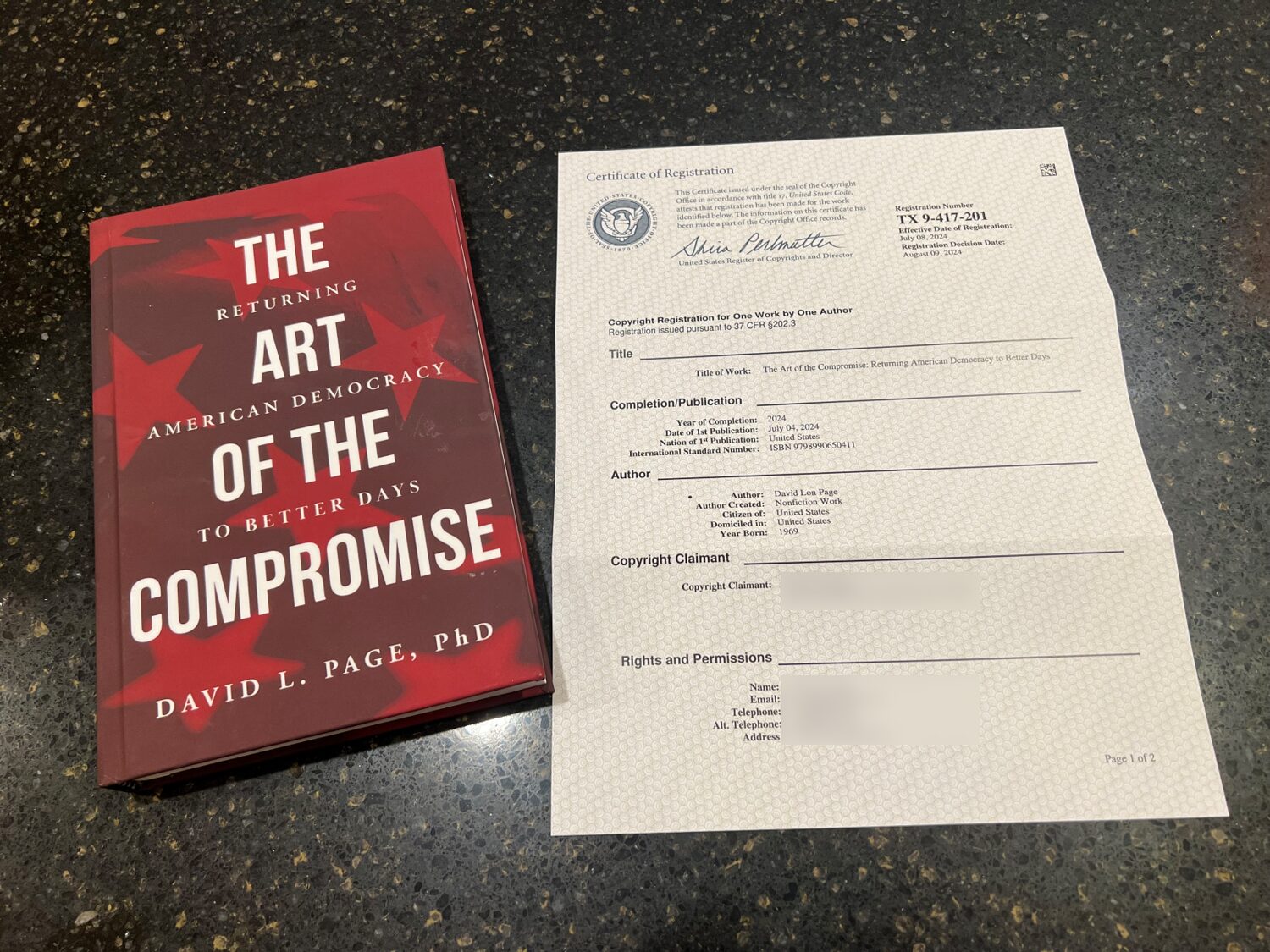
That distinction is central to the argument I made in The Art of the Compromise. The American system has endured not because it avoids conflict, but because it forces conflict into structures where compromise becomes necessary. Our constitutional design divides power through checks and balances, bicameralism, federalism, staggered elections, and the separation of powers. The two-party system adds another layer by pressing diverse factions, regions, interests, and temperaments into broad coalitions that must learn to govern together.
That is not a weakness of the American system. It is one of its great strengths.
Yes, the American system can deadlock. But deadlock is not merely a defect. It is also a warning light. When compromise fails, the system slows down. It refuses to convert narrow passion into immediate power. It tells the factions to go back, bargain, broaden their coalition, and try again. That can be maddening, but it is also one reason the United States has survived crisis after crisis for nearly 250 years.
The danger today is not that America has too much compromise built into its system. The danger is that the habits and structures that make compromise possible have weakened. Our parties are less able to contain their factions. Our primaries reward intensity more than coalition-building. Our media rewards outrage more than negotiation. Our elected officials are often punished for the very bargaining the Constitution requires.
The lesson is not that Europe has solved polarization while America has failed. Different systems process polarization differently. Parliamentary systems may translate polarization into coalition instability, party fragmentation, or populist breakthroughs. The American system translates polarization into institutional deadlock.
But deadlock is not proof that the American system is broken beyond repair. It is proof that the system is demanding what it was designed to demand: compromise.
The question for Americans is not whether we can import someone else’s constitutional machinery. The question is whether we still understand our own.
Klein Sees the Problem, But Stops Short
Klein understands that America’s political system requires compromise. He understands that our current party system makes compromise increasingly irrational. He understands that identity-driven politics turns political defeat into social and cultural humiliation.
But he does not offer a strong enough structural prescription.
That is where I part company with him.
The problem is not simply that Americans need to become nicer, more informed, less tribal, or more willing to listen. Those would all be good things, but they are not enough. A republic cannot depend on constant virtue. James Madison knew better. The Founders did not design a system that assumed angels would govern. They designed a system for flawed human beings with ambition, passion, interest, and faction.
The genius of the American system was not that it eliminated faction. It accepted faction as natural and then tried to contain it through structure. Power would check power. Ambition would counter ambition. Large republics would dilute faction. Institutions would slow down passion long enough for deliberation and compromise to occur.
In my view, our present crisis comes not only from polarization itself, but from the weakening of the republican structures that once helped manage polarization.
We have spent generations treating “more democracy” as the automatic answer to every political problem. More direct participation. More open primaries. More nationalized campaigns. More performative transparency. More plebiscitary pressure. More immediate responsiveness to public anger. More incentives for politicians to appeal directly to the most activated voters. More media exposure. More fundraising from outrage. More politics conducted in public, for cameras, clicks, and applause.
The result has not been healthier self-government. The result has often been more factional politics, more performative politics, and less compromise.
That is the argument I make in More Republic, Less Cowbell. The problem is not that democracy is bad. Democracy is essential. The problem is that democracy without republican structure becomes unstable. It becomes noisy. It becomes reactive. It becomes vulnerable to passion, faction, demagoguery, and deadlock. Too much cowbell is a bad thing.
America does not need less self-government. America needs better-structured self-government.
More Republic, Not More Noise
The phrase “more republic” can sound unnatural to modern ears because we have trained ourselves to believe that every reform should move in the direction of more direct democracy. If politics is broken, we assume voters need more direct control. If parties are broken, we assume party leaders need less influence. If Congress is broken, we assume members need more exposure to public pressure. If compromise is failing, we assume politicians need to hear more loudly from the people.
But what if that instinct is part of the problem?
A constitutional republic is not designed to turn every passing passion into immediate public policy. It is designed to refine, filter, delay, balance, and channel public opinion. It is supposed to force coalition-building. It is supposed to make narrow factional victories harder. It is supposed to reward those who can persuade beyond their base. It is supposed to create space for deliberation rather than constant performance.
Many of our modern reforms have weakened those republican habits. We have made it easier for small, intense factions to dominate primaries. We have made members of Congress more afraid of their own base than of failing to govern. We have nationalized local politics. We have turned deliberative institutions into stages. We have confused visibility with accountability and noise with representation.
Klein sees that polarization is jamming the gears of the American system. I agree. But my conclusion is that the gears are jamming partly because we have stripped away too much of the republican machinery that was meant to manage faction in the first place.
Compromise Requires Structure
Compromise does not happen because people wake up one morning feeling generous. Compromise happens when institutions make compromise necessary, possible, and politically survivable.
That distinction matters.
Politicians will rarely compromise if every incentive tells them compromise is betrayal. Voters will rarely reward compromise if the nomination system empowers the angriest and most ideologically intense participants. Legislators will rarely deliberate seriously if every conversation becomes a televised performance. Parties will rarely build broad coalitions if factional energy is enough to win low-turnout contests.
Klein’s book helps explain why compromise has become so hard. My critique is that he does not go far enough in asking how our structures changed in ways that made compromise even harder.
The American system was designed to frustrate raw majority passion, not because the Founders hated democracy, but because they understood human nature. They understood that people are passionate, self-interested, tribal, ambitious, fearful, and often wrong. The point of a republic is not to deny the voice of the people. The point is to govern through institutions sturdy enough to turn public opinion into durable judgment.
That is the difference between mere democracy and republican government.
Final Judgment
Why We’re Polarized deserves to be read. Klein offers one of the better diagnoses of modern American political dysfunction. He is especially strong in showing how party identity has become fused with social identity, and how that fusion makes compromise feel like surrender. He is also right that the American system depends on compromise more than many other systems do, and that polarization makes our constitutional design harder to operate.
But diagnosis is not cure.
If polarization is jamming a system built for compromise, then the answer cannot simply be better attitudes, better information, or more democracy. The answer must include a recovery of republican structure.
We need institutions that dilute faction rather than amplify it. We need nomination systems that reward coalition-builders rather than factional champions. We need legislative bodies that deliberate rather than perform. We need political incentives that make compromise survivable again. We need to remember that the American system was not designed to be a direct pipeline from passion to power. It was designed to refine passion through structure.
Ezra Klein is right that we are polarized.
The question is what we do about it.
My answer is simple, though not easy: more republic, less cowbell.
AI note: AI assisted with drafting and editing this essay. The arguments, conclusions, Madisonian tendencies, and any excessive suspicion of cowbell remain entirely human.