A Maintenance Inspection of the Republic of Me
At fifty-six years of age, preventive maintenance no longer feels elective.
It begins to resemble civic responsibility.
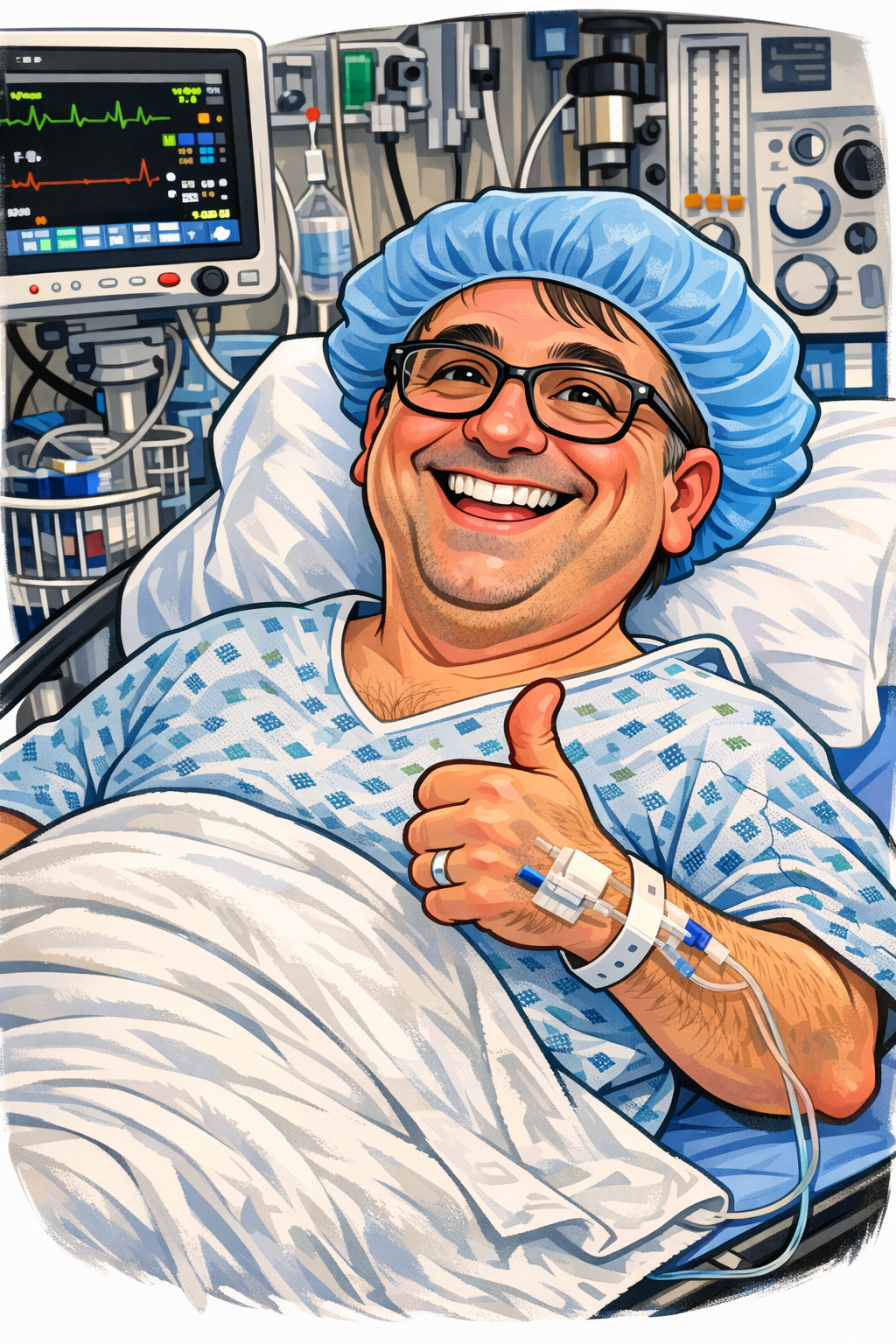
Today I underwent a colonoscopy—performed by the same physician who, several years ago, approached my internal geography from the northern border. Acid reflux had required an upper endoscopy to inspect the esophagus for precancerous changes. He has now conducted a comprehensive survey—a grand tour of Dave’s Digestive Orient Express.
I reminded him that he had now seen both my good side and my bad side. At this point, our relationship had matured. He was no longer merely my doctor. He was my cartographer.
I asked whether he planned to leave a golden spike at the junction—something ceremonial to mark the transcontinental achievement. The nation commemorated the joining of rail lines in 1869. Modern gastroenterology could, in principle, do the same.
He did not respond. Perhaps he preferred to remain simply my physician. I still called him Doc.
Humor stabilizes situations where dignity must temporarily yield to procedure.
But beneath the jokes lies something serious: systems that endure are systems that are inspected.
The Recitation of Risk
Before the procedure, the doc entered with a calm, professional tone and began listing everything that could go wrong.
Perforation. Bleeding. Adverse reaction to anesthesia. Infection. Complications that require surgery. Complications that require hospitalization.
He delivered the warnings in the cadence of a police officer reciting Miranda rights. Memorized. Precise. Legally necessary. Professionally rehearsed.
“You have the right to understand the risks…”
He did not phrase it that way, but the structure was similar. This was informed consent—medicine’s constitutional requirement. Authority restrained by transparency.
At the end of the recitation, he placed a hand on my chest and said, “Do not worry. Those are highly unlikely and will not happen today.”
I paused him.
“Thanks, Doc. I am paying you for your expertise when something does go wrong. I trust you.”
He laughed—finally, he laughed–but the laugh was of someone who may have heard that line before, or perhaps had not heard it often enough.
Trust, in that moment, was voluntary. I was not coerced. I was informed. I chose. As my family knows, Death has no pride with me and has no power over me.
The Republic of Me consented to inspection.
NASA Did Not Skip the Checklists
When NASA selected the Mercury 7 astronauts in the 1950s, the public saw heroism. The internal reality was procedure.
Isolation tanks. Blood panels. Cardiovascular stress tests. Psychological scrutiny. The men were not merely brave; they were evaluated as mission-critical systems.
No rocket left the pad without checklists. No launch proceeded without confirmation from multiple consoles. Redundancy preserved life.
I do not recall reading that John Glenn drank polyethylene glycol at two in the morning.
Yet the spirit aligns.
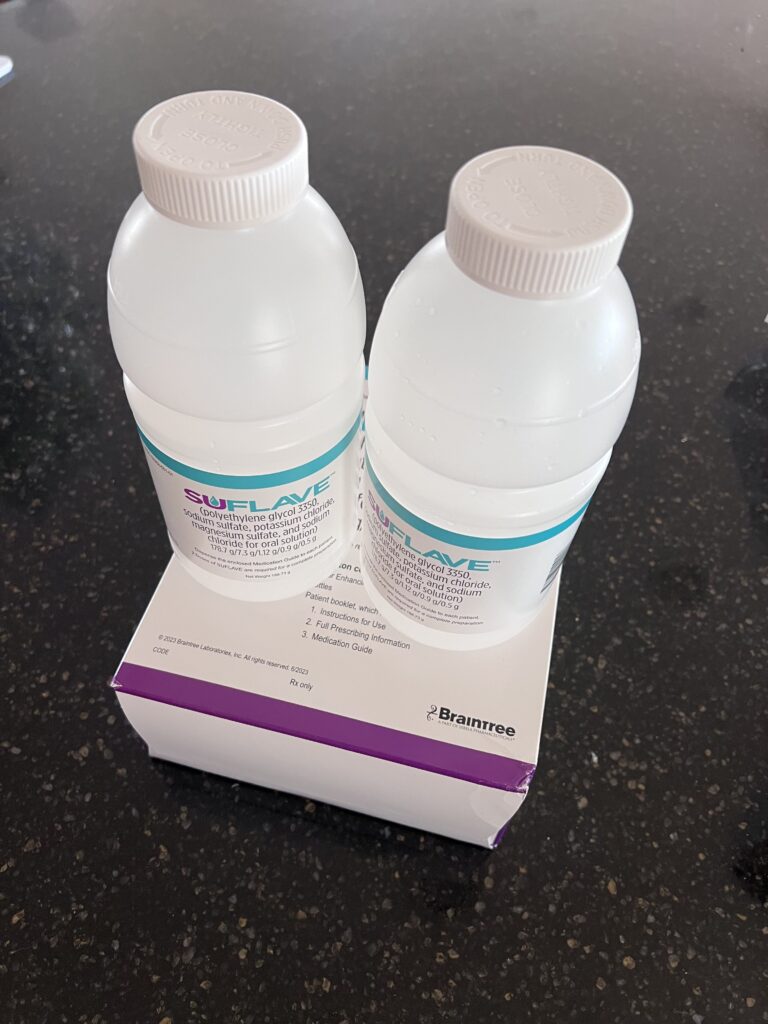
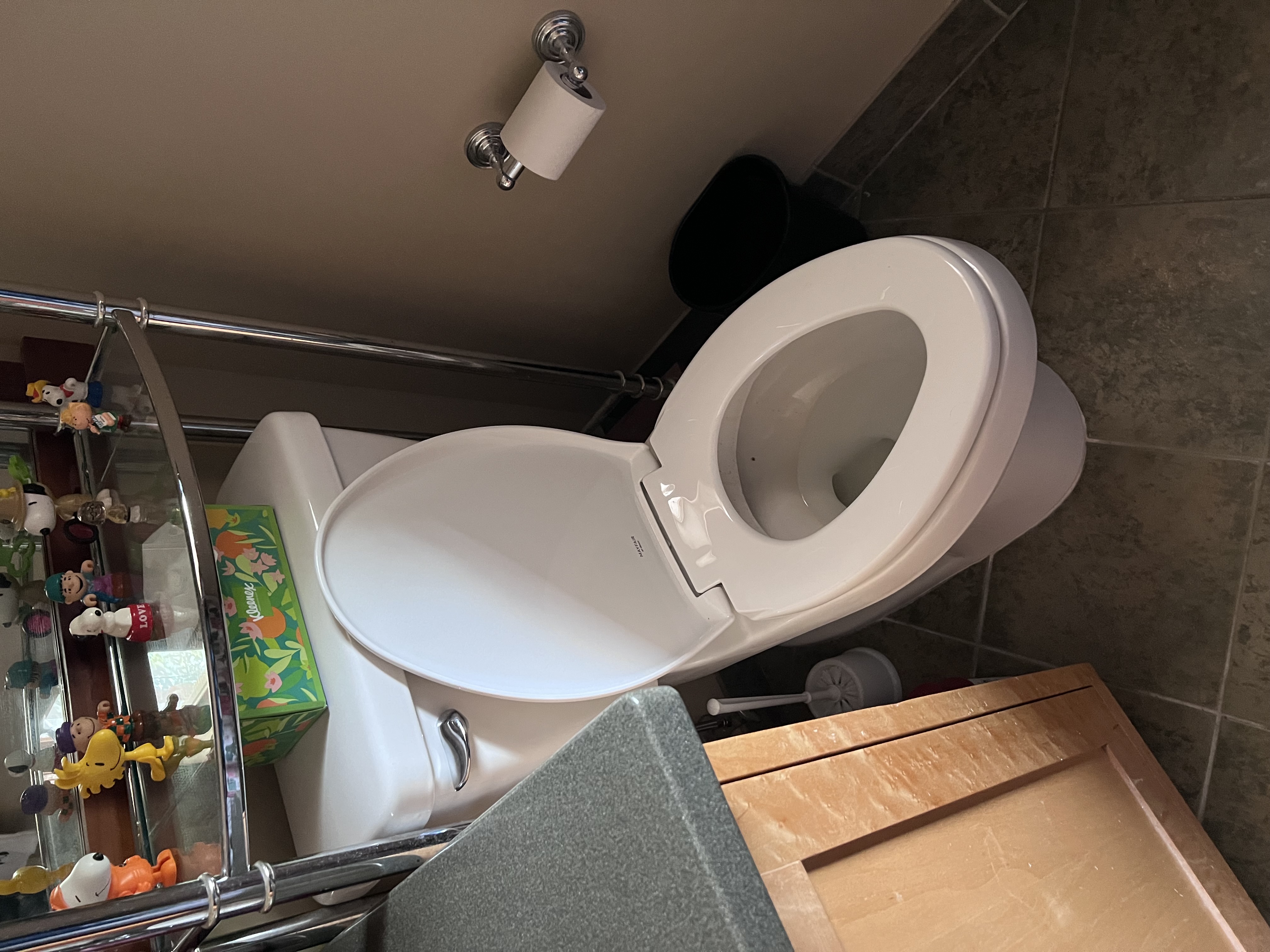
The SuFlave bottles—sterile, white, chemically labeled—are not glamorous. They are preparatory. They flush the line, from Paris to Constantinople. They remove ambiguity. By 2:00 a.m., the throne and I had established full diplomatic relations. Transparency was achieved.
The colonoscopy does not seek drama. It seeks clarity.
Exploration requires preparation.
Federalism of the Flesh
The human body resembles a federal republic.
The heart governs circulation. The lungs regulate oxygen exchange. The liver processes toxins. The colon manages waste quietly and without applause.
Each organ retains jurisdiction. Coordination occurs without daily deliberation. Most of the time, the system runs smoothly.
But small irregularities develop.
A polyp forms—two millimeters. Three millimeters. Insignificant in appearance. Yet left unattended, some polyps mutate. They evolve silently. No speech. No announcement.
Screening interrupts that arc.
Preventive medicine functions like constitutional review before rebellion. Identify instability early. Remove the threat while still manageable. Preserve the integrity of the whole.
Humor surrounds colonoscopy because the alternative is less amusing.
The Magic Band and the Litany of Birthdays
Upon arrival, I was fitted with a wristband.
A magic band.
Disneyland uses one for rides. The surgery center uses one for sedation.
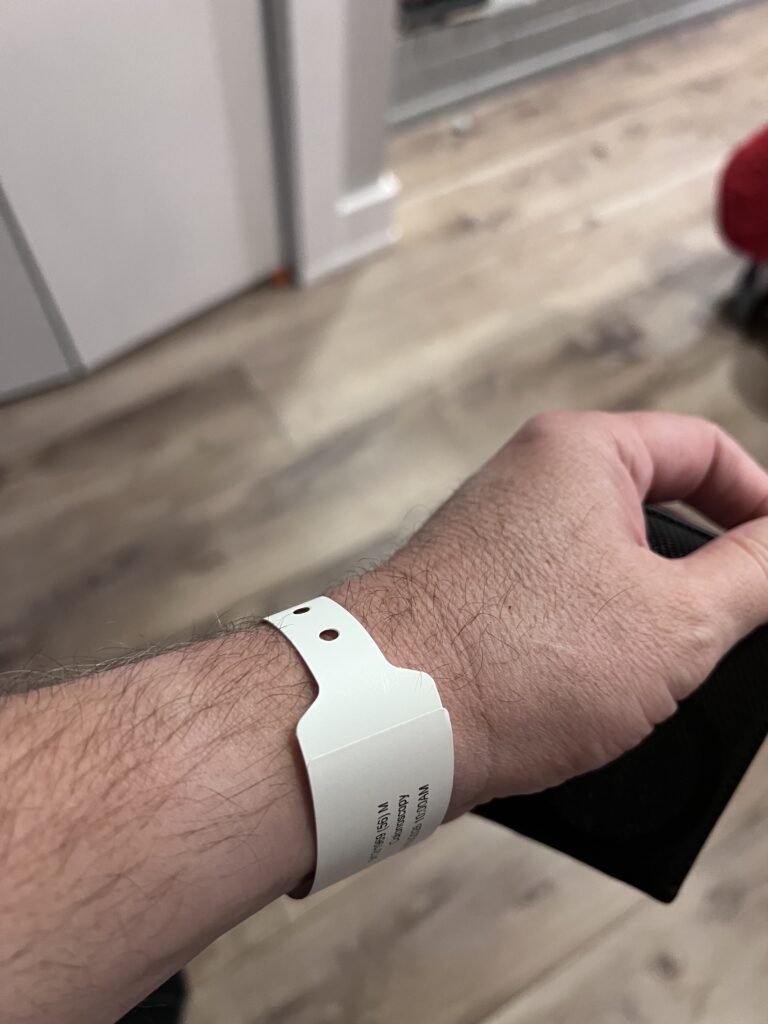
Every staff member asked for my date of birth. Again. And again. And again.
“Can you confirm your birthday?”
Identity in numeric form. Redundancy layered upon redundancy. The system does not assume. It verifies.
NASA did not rely on memory alone. Medicine does not rely on casual affirmation. Protocol preserves life.
The Republic of Me required authentication at every checkpoint.
Smock Sociology
While waiting in pre-op and later recovering in post-op, I studied the system.
It is either my superpower or my fatal flaw. I cannot stop watching. Watching people. Watching interactions. Watching process. Watching efficiency.
Most patients scroll their phones. I audit workflows.
Blue smocks moved steadily through the corridors. They carried clipboards, adjusted IV lines, answered call buttons, coordinated transport. Employees of the surgical center itself. Institutional continuity. Embedded infrastructure.
Black and gray smocks appeared with a different cadence. Anesthesiologists. Contracted specialists. Independent professionals integrated into the operation but not owned by it. Physicians seemed to occupy their own chromatic tier.
The color palette was not accidental. It was structural.
Later, I asked a nurse whether my theory held water. She confirmed it with a polite nod that carried the faint undertone of professional tolerance. The colors reflected employment relationships. Staff versus contractors. Core versus specialist.
Please do not ask why my mind asks these questions. Or why I use recovery time to reverse-engineer labor models.
The nurse—left-handed, by the way, which I consider a mark of either intelligence or creative defiance—gently brushed me off as a weirdo.
She was not wrong—a warped mind, after all.
Still, even inside a surgical suite, the American economy reveals its architecture. Employees provide continuity. Contractors provide expertise. Specialists plug into systems for defined missions. Authority is distributed. Responsibility is layered.
The colonoscopy is not a solitary act performed by a lone heroic physician. It is a coordinated ecosystem. Division of labor. Defined authority. Clear lines of responsibility. Redundancy.
The Republic of Me was not examined by one man alone.
It was examined by a system designed to function even when individuals vary.
That realization comforts me more than the anesthesia.
The Anesthesia Question
Before sedation, there is always a quiet thought.
What if I do not wake up?
The thought does not paralyze. It clarifies.
Anesthesia remains one of civilization’s most astonishing achievements — controlled unconsciousness administered with precision. A human being consents to temporary oblivion and trusts strangers to manage breathing, blood pressure, and return.
That surrender is not trivial. It rests on skill, protocol, and accumulated expertise.
So I wore one of my favorite T-shirts—“Vote for Nixon.” If history intended to close my file, I preferred proper attire.

The nurse glanced at the shirt. Her expression suggested that gallows humor may not be a standard recovery-room coping mechanism.
Long-time readers of this blog know I maintain an uneasy fascination with Richard Nixon. His collapse overshadows much of his record. Watergate sits like a permanent asterisk. Yet the man possessed strategic depth and political instinct that shaped foreign policy in consequential ways. A gifted politician. A flawed character. A study in ambition, paranoia, and unrealized statesmanship.
The shirt is less endorsement than historical irony.
If the curtain were to fall, I preferred to exit in something suitably complicated.
The anesthesiologist spoke calmly. Monitors hummed. The room felt ordinary in a way that made the moment less dramatic than the mind imagines.
Then nothing.
Then recovery.
Souvenirs from the Interior Frontier
Afterward, they handed me photographs.
Appendiceal orifice. Terminal ileum. Ileocecal valve. Ascending colon. A three-millimeter polyp removed. A two-millimeter polyp excised. Clean resection.
Vacation photos from an unlikely destination.
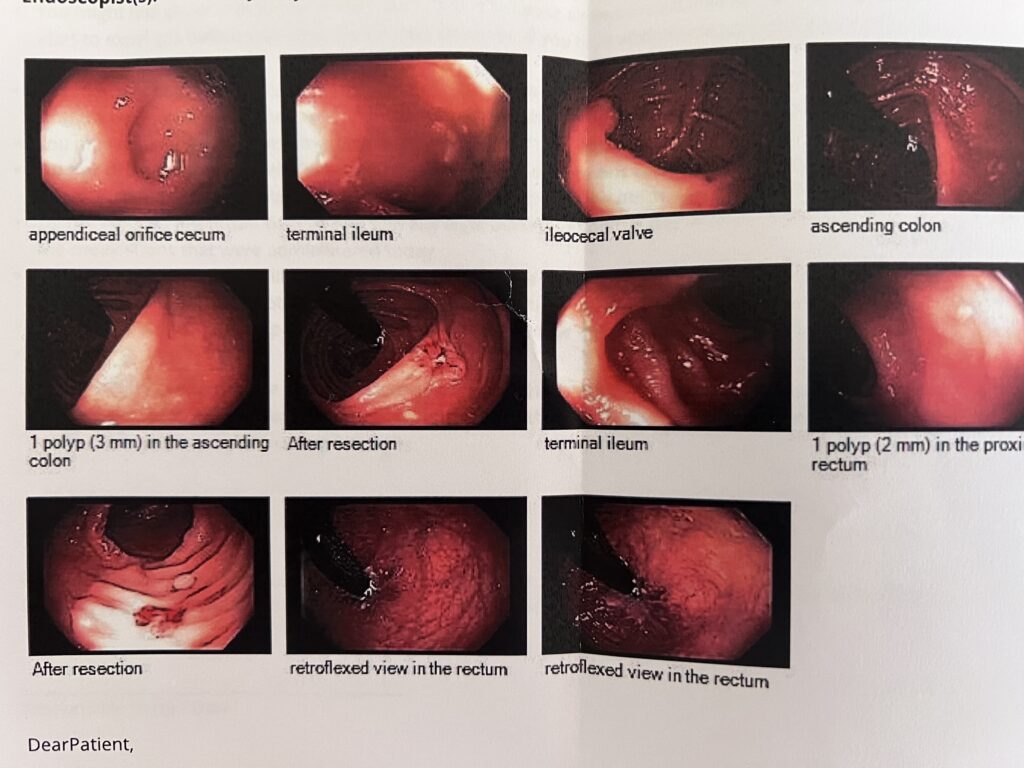
NASA returned from orbit with telemetry. I returned with imagery.
The photographs are secondary. The removals matter.
Colorectal cancer develops quietly. Screening interrupts the quiet.
The Final Exchange
At discharge, I asked the attending nurse whether I might see the doctor again. I needed a private word with him. While in recovery, I had made a startling discovery. Professional obligation required disclosure.
Her concern surfaced immediately.
“Oh no,” she said. “Can I help?”
Her tone shifted from routine efficiency to clinical alertness. Recovery rooms are not places where “startling discoveries” are welcomed casually.
“No,” I said gravely. “I really need to speak with him.”
She paused.
“What is it?”
I leaned forward slightly in the bed. I raised one hand to the side of my mouth as if shielding classified information from unintended listeners. I lowered my voice to a whisper.
“It’s my butt.”
She waited.
“It has a big crack in it.”
The silence that followed was not the laughter I had anticipated.
Medical professionals have heard every variant of that joke. They have catalogued them. Indexed them. Possibly cross-referenced them in continuing education seminars.
Still, levity serves a purpose.
Colonoscopy requires surrender—surrender of modesty, control, and a certain illusion of invulnerability. Humor restores a small measure of agency. It allows a patient to reassert personality in a setting designed for clinical efficiency.
The crack was not new.
The relief was.
The Responsible Close
Colonoscopy is inconvenient. The preparation is unpleasant. The jokes are abundant.
But the procedure works.
NASA tested rockets before launch because failure in flight carries consequences. Medicine inspects organs because failure in silence carries consequences.
Systems endure when maintained.
If you are over fifty—or younger with risk factors—schedule it. Drink the prep. Accept the ritual. Imagine you are a Mercury astronaut. Memorize your birthday. Wear a t-shirt you like, maybe one with a message. Trust expertise while retaining agency.
Consider the colonoscopy routine maintenance on the Republic of You.
The doctor may go both ways.
Better that than cancer does.
Warped Minds Transparency Statement:
In keeping with informed consent, this essay was drafted with assistance from artificial intelligence. The structure may be computational. The experience was entirely human.