The Presidents Who Governed a Large Republic Rather Than a Political Tribe
I never set out looking for Republican presidents.
The realization arrived slowly, almost accidentally, after years spent reading history, studying political systems, and trying to understand why some leaders steady a nation while others inflame one. I never began with party labels—though I confess my GOP history. I began with questions.
Who held the country together during moments of fracture?
Who understood power as stewardship rather than performance?
Who preserved institutions instead of merely conquering opponents?
Who governed with enough realism to accept that democracy rarely produces purity?
When I looked backward through American history, the same names kept resurfacing.
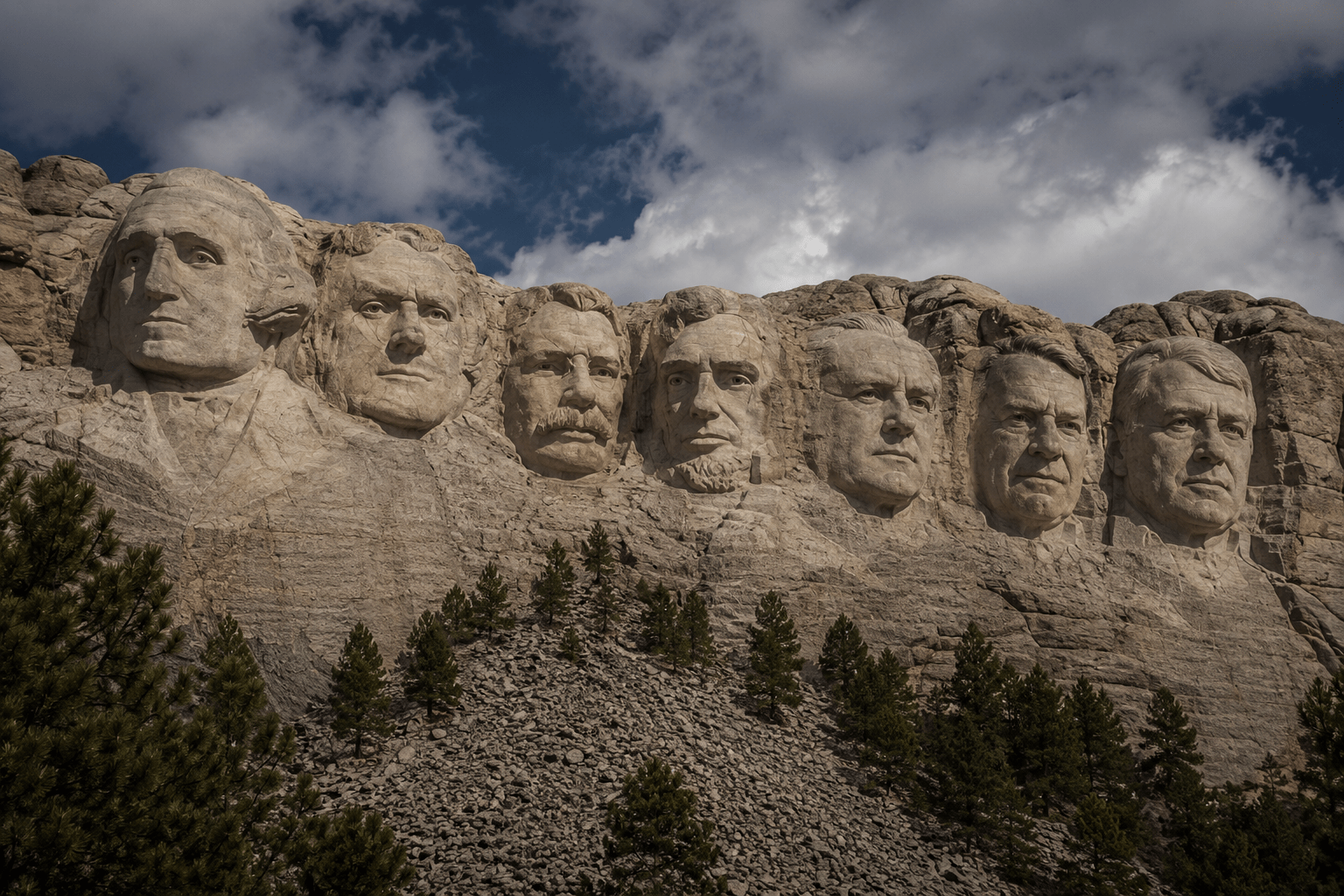
George Washington.
James Madison.
Abraham Lincoln.
Ulysses S. Grant.
Theodore Roosevelt.
Dwight D. Eisenhower.
Richard Nixon.
Ronald Reagan.
George H. W. Bush.
Except for Washington and Madison, the list leans unmistakably Republican.
That surprised me.
Not because Republicans possess a monopoly on statesmanship. American history would collapse under such a simplistic reading. Franklin Roosevelt saved capitalism from itself. Truman anchored the postwar order. Kennedy restored national vigor during the Cold War. Serious students of history can admire greatness wherever greatness appears.
The surprise emerged because the qualities I admire most do not align neatly with modern partisan caricatures.
The men on my list were not ideological purists.
Most were builders. Stabilizers. Institutional custodians. Pragmatists, carrying the burden of governing a continental republic filled with competing regions, classes, religions, and moral visions.
Several expanded federal authority. Several compromised constantly. Several governed with caution rather than applause-seeking theatricality.
Modern politics rarely remembers them that way.
The Men Who Held the Center
The older I become, the less interested I am in presidents who merely win arguments.
I admire presidents who prevented national collapse.
Lincoln stands at the center of that instinct.
Many Americans now discuss the Civil War primarily through the lens of slavery, emancipation, or regional grievance. Each subject matters enormously. Yet another truth sits beneath the entire conflict: constitutional democracy itself nearly shattered under the pressure of factional division.
Lincoln understood that reality with terrifying clarity.
If electoral defeat justified secession, republican government could never survive. Every future election would carry the latent threat of disunion and fragmentation. Lincoln held the Union together not because consensus existed, but because consensus no longer existed.
Grant inherited the far more difficult burden afterward.
Winning wars often proves easier than securing peace. Reconstruction required more than speeches about unity. Reconstruction required federal enforcement against insurgency, intimidation, and organized resistance throughout the South. Grant understood that preserving constitutional order meant protecting citizens after the battlefield fell silent.
Washington confronted an even earlier version of the same danger.
The United States began not as a nation, but as thirteen suspicious states loosely stitched together by revolutionary exhaustion. Washington carried enough personal prestige to become something dangerously close to an American monarch. Instead, he surrendered power voluntarily and stabilized the constitutional experiment before faction and regional rivalry could tear the republic apart.
Madison supplied the intellectual architecture underneath Washington’s restraint.
Madison never believed factions could be eliminated. Madison believed factions had to be managed. A large republic, layered institutions, dispersed authority, and representation itself all emerged from that central insight. Human beings do not suddenly converge into harmony because ballots are counted.
Democracy aggregates preferences.
Constitutional systems contain conflict.
That distinction still matters.
The Pragmatists Modern Politics Forgot
Modern politics rewards purity performances.
Several presidents on my list governed from the opposite instinct entirely.
Theodore Roosevelt loved American dynamism, industry, expansion, and ambition. Roosevelt also understood that concentrated economic power could destabilize republican legitimacy itself. Trust-busting, conservation, labor reform, and national stewardship emerged not from hostility toward capitalism, but from Roosevelt’s belief that capitalism required moral boundaries to survive politically.
Eisenhower governed with similar restraint half a century later.
Ike may be the most underrated president of the twentieth century precisely because he lacked drama. His presidency carried the temperament of a man who had already witnessed civilization collapse once in Europe and had no interest in reckless experimentation afterward.
Eisenhower stabilized the Cold War without allowing panic to consume the republic. He built the interstate highway system, maintained fiscal discipline, resisted military adventurism more often than later mythology admits, and governed with quiet competence rather than constant emotional mobilization.
Then comes Nixon.
No president on my list creates more discomfort.
Watergate remains a profound constitutional stain. Any honest assessment of Nixon must begin there. Yet history also demands intellectual seriousness rather than cartoon morality. Nixon opened relations with China, reshaped global geopolitics, expanded environmental regulation, and governed with a level of strategic realism now almost extinct in American politics.
Modern political culture struggles with complicated figures.
History does not.
The Burden of American Leadership
Ronald Reagan understood something many technocrats forget.
Nations require emotional confidence alongside competent management.
The United States entered the 1980s exhausted by inflation, stagnation, cultural fragmentation, and Cold War anxiety. Reagan restored optimism before he restored policy confidence. His rhetoric reminded Americans that decline was not inevitable. His strategic pressure against the Soviet Union accelerated the closing years of the Cold War while reviving belief in American possibility.
Bush Sr. represented a quieter version of the same governing tradition.
George H. W. Bush approached power less as ideological theater and more as strategic stewardship. The Gulf War succeeded not merely because American military power proved overwhelming, but because Bush assembled a broad coalition, maintained limited objectives, and resisted the temptation to convert victory into crusading excess.
Modern politics often mistakes caution for weakness.
History usually judges prudence more kindly.
Bush understood something many modern leaders forget: stable orders are easier to destroy than rebuild.
The Republicanism Beneath the Republican Party
When I step back from the entire list, I do not see partisan loyalty as much as a recurring philosophy of governance.
I admire presidents who accept complexity.
Presidents who understood that constitutional systems exist to manage disagreement rather than eliminate disagreement.
Presidents who recognized that large republics require patience, compromise, institutional restraint, and emotional maturity.
Ironically, many of those men emerged from the Republican Party, though several would likely feel politically homeless inside modern hyper-partisan politics.
Perhaps that tension explains part of my own discomfort with contemporary political tribalism.
I do not admire leaders because they promise moral perfection.
I admire leaders because they preserve the republic long enough for imperfect people to continue arguing peacefully inside it.
Washington understood that burden instinctively.
Madison explained the architecture beneath it.
Lincoln preserved the structure through fire.
The others, each in their own era, carried the weight forward for another generation.
AI Disclosure: This article was assisted by artificial intelligence. Think of AI as the research intern who never sleeps, never eats, and occasionally suggests terrible transitions with absolute confidence. The opinions, historical judgments, and questionable presidential rankings remain entirely my own.