What Happens When Everyone Thinks Several Moves Ahead?
“Never go in against a Sicilian when death is on the line!”
Few movie scenes have remained as memorable as the famous battle of wits from The Princess Bride. The setup appears simple. Vizzini, the self-proclaimed genius, sits across from the Dread Pirate Roberts. Two goblets rest on the table. One contains poison. One does not. Roberts places the poison into one of the cups and challenges Vizzini to choose.
What follows is one of the funniest depictions of intelligence ever put on film.

Vizzini begins constructing an elaborate chain of logic. Roberts could not have placed the poison in front of him because Roberts knows Vizzini is intelligent enough to suspect such an obvious trick. Yet Roberts also knows that Vizzini knows Roberts knows that. Therefore, the poison must be in the other goblet. Unless Roberts anticipated that reasoning. In that case, perhaps the poison is in the first goblet after all.
The logic spirals deeper and deeper. Each step sounds brilliant. Each step sounds sophisticated. Each step sounds more intelligent than the last.
The audience laughs because everyone instinctively senses that something has gone wrong.
Vizzini is not becoming wiser.
Vizzini is becoming trapped.
The scene succeeds because it exaggerates a very real human capability. Human beings possess an extraordinary ability to model the thoughts of others. The same cognitive skill that allows us to negotiate, cooperate, deceive, compete, and govern also allows us to become prisoners of our own reasoning.
Psychologists call the foundation of that skill Theory of Mind. Economists often call the extended version Level-k reasoning. Investors frequently describe the same process as second-order thinking. Military strategists simply call it anticipating the enemy. Different disciplines use different terminology. The underlying idea remains remarkably similar. The ability to understand another mind is one of humanity’s greatest strengths.
The ability to understand another mind too deeply can sometimes become a weakness.
Theory of Mind and the Human Advantage
Theory of Mind refers to the ability to recognize that another person possesses beliefs, intentions, desires, and knowledge separate from our own. Human beings learn this skill gradually during childhood. A young child often assumes everyone knows what the child knows. A slightly older child eventually discovers that another person can hold a false belief.
That realization sounds trivial. In reality, it may be one of the most important cognitive developments in human history.
Theory of Mind makes empathy possible because empathy requires imagining another person’s experience. Theory of Mind makes deception possible because deception requires understanding what another person believes. Theory of Mind makes politics possible because politics requires anticipating how other people will react to incentives, arguments, and events.
Theory of Mind may even help explain why human beings dominate the planet. Wolves hunt in packs. Ants build colonies. Chimpanzees cooperate in small groups. Human beings coordinate the actions of millions of strangers through governments, markets, religions, corporations, and institutions. Such cooperation depends upon the ability to model the intentions of others.
The next step is where things become interesting.
If I can think about your thoughts, I can also think about what you think about my thoughts.
That is where Theory of Mind evolves into recursive reasoning.
When Intelligence Becomes a Hall of Mirrors
Economists call it Level-k reasoning. The first level is simple. I think. The second level introduces another mind. I think that you think. The third level becomes more complicated. I think that you think that I think. The fourth level becomes increasingly difficult to track. I think that you think that I think that you think. We recall Vizinni’s spiraling through k levels. The chain can continue indefinitely.
Investors often describe the same concept as second-order thinking. Great investors do not merely ask what will happen next. Great investors ask how everyone else expects events to unfold and how those expectations will shape behavior. Military planners perform similar exercises. Political strategists do the same thing during campaigns.
Vizzini’s famous speech from The Princess Bride is simply recursive reasoning taken to a comedic extreme. The audience laughs because the reasoning becomes absurd. The audience also laughs because everyone recognizes the pattern. Many intelligent people spend entire careers trapped inside similar chains of thought.
The danger is subtle. Intelligence begins by helping us understand reality. Eventually, intelligence can become detached from reality altogether. The strategist becomes so focused on modeling minds that the strategist forgets to question the assumptions of the game itself.
Vizzini assumes the contest is about selecting the correct goblet. Each deduction follows from that assumption. Each brilliant insight follows from that assumption. Each recursive layer follows from that assumption.
The assumption is wrong. The Dread Pirate Roberts has already changed the game. That distinction turns out to be the central lesson of strategy.
WarGames and the Logic of Deterrence
The same lesson appears in a very different movie.
In the climactic scene of WarGames, the military supercomputer known as WOPR repeatedly simulates Global Thermonuclear War. Thousands of scenarios unfold. One side launches missiles. The other side responds. The first side responds to the response. Escalation follows escalation.
The machine is effectively performing Level-k reasoning at machine speed. What happens if the Soviets attack? What happens if the Americans respond? What happens if the Soviets anticipate that response? What happens if the Americans anticipate the anticipation? The recursive chain grows deeper and deeper.
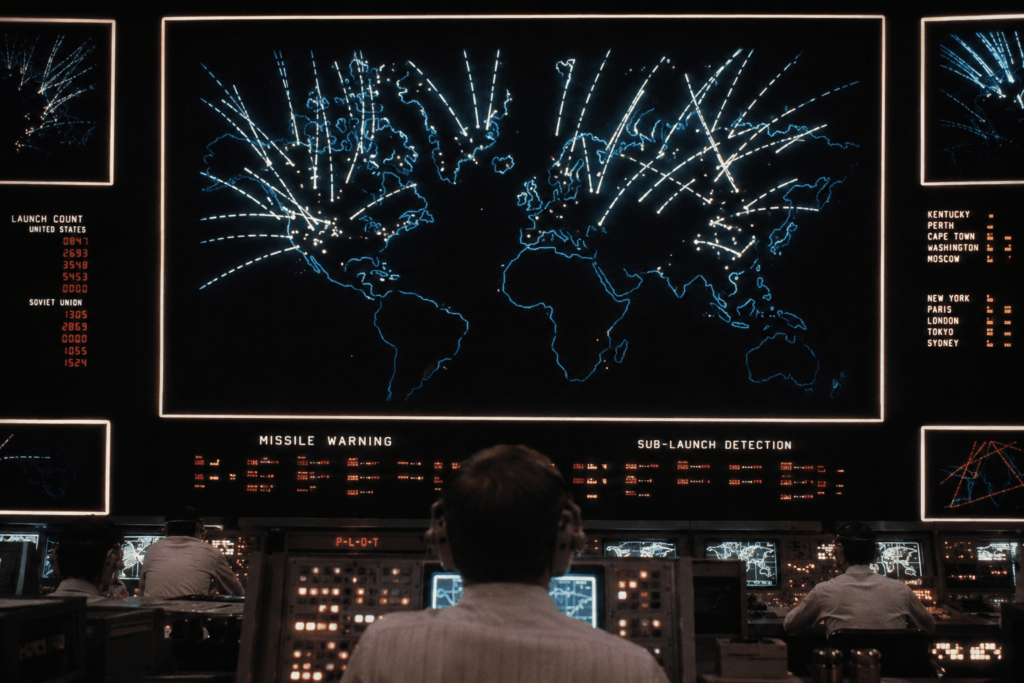
Eventually, the machine reaches its famous conclusion.
“A strange game. The only winning move is not to play.”
The line became one of the most memorable moments in Cold War cinema because the conclusion feels simultaneously obvious and profound. The computer discovers that some games contain no winning outcome. Additional intelligence does not produce a better answer Additional intelligence merely confirms the hopelessness of the game.
The WOPR does not discover victory. The WOPR discovers deterrence.
Bobby Fischer and the Limits of Prediction
Another lesson emerged from an entirely different Cold War arena.
In Bobby Fischer Goes to War, the authors describe Fischer’s historic confrontation with the Soviet chess machine. Soviet grandmasters enjoyed advantages that no individual player could match. Teams of analysts examined openings. Decades of accumulated theory guided preparation. Each predictable line had already been studied.
An ordinary player would attempt to out-calculate opponents within the established framework.
Fischer often chose another path. Fischer regularly entered positions his opponents had not prepared for. Fischer willingly abandoned familiar theoretical lines. Fischer introduced uncertainty into systems designed around prediction. The objective was not randomness. The objective was strategic unpredictability.
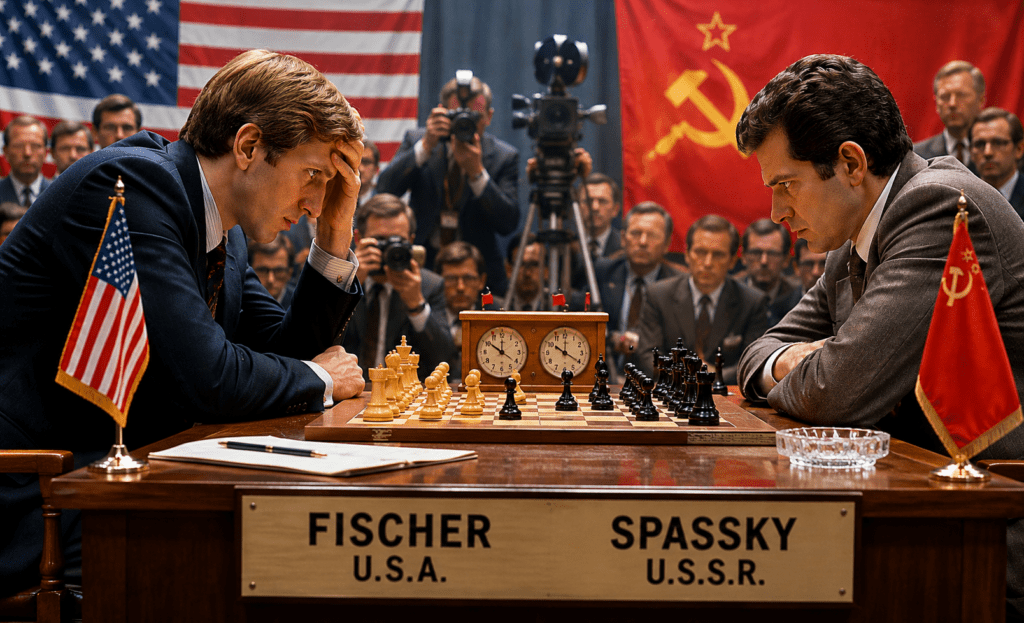
A perfectly predictable opponent eventually becomes vulnerable. An opponent who cannot be modeled easily becomes much more difficult to defeat. Fischer discovered something Vizzini never understood. Equally intelligent opponents often neutralize one another.
If both sides are capable of deep recursive reasoning, each new level merely produces another counter-level. The result resembles an arms race of cognition. At some point, thinking one move further ahead ceases to provide a meaningful advantage. The strategist must either become unpredictable or change the game entirely.
Eisenhower’s Strategic Insight
Dwight Eisenhower spent most of his adult life studying war. Few Americans have ever possessed a deeper understanding of military conflict. Eisenhower coordinated the largest military campaign in human history. Eisenhower witnessed both the extraordinary power and staggering cost of industrial warfare. Those experiences led him toward a conclusion that many military thinkers found uncomfortable.
Nuclear weapons had fundamentally changed the nature of great-power conflict. Previous generations could discuss victory and defeat in familiar terms. One nation could defeat another. One army could prevail while another army surrendered. The arrival of thermonuclear weapons altered the calculation.
The United States possessed nuclear weapons. The Soviet Union possessed nuclear weapons. The United States knew the Soviet Union possessed nuclear weapons. The Soviet Union knew the United States possessed nuclear weapons. Both sides knew that the other side knew. Theory of Mind had become statecraft.
Recursive reasoning had become grand strategy.
Each military action had to be viewed through multiple layers of anticipated response. A conventional clash could trigger escalation. Escalation could trigger retaliation. Retaliation could trigger further escalation. The logic looked remarkably similar to Vizzini’s chain of reasoning, except the consequences involved millions of lives rather than two goblets of wine.
Eisenhower understood that reality.
Rather than maintaining a conventional military large enough to match each Soviet capability across each battlefield, Eisenhower pursued what became known as the “New Look” strategy. Secretary of State John Foster Dulles later described the cornerstone of that strategy as “Massive Retaliation.” The concept was simple, if unsettling. Soviet leaders needed to believe that aggression against the United States or its vital interests could trigger consequences far greater than any potential gains.
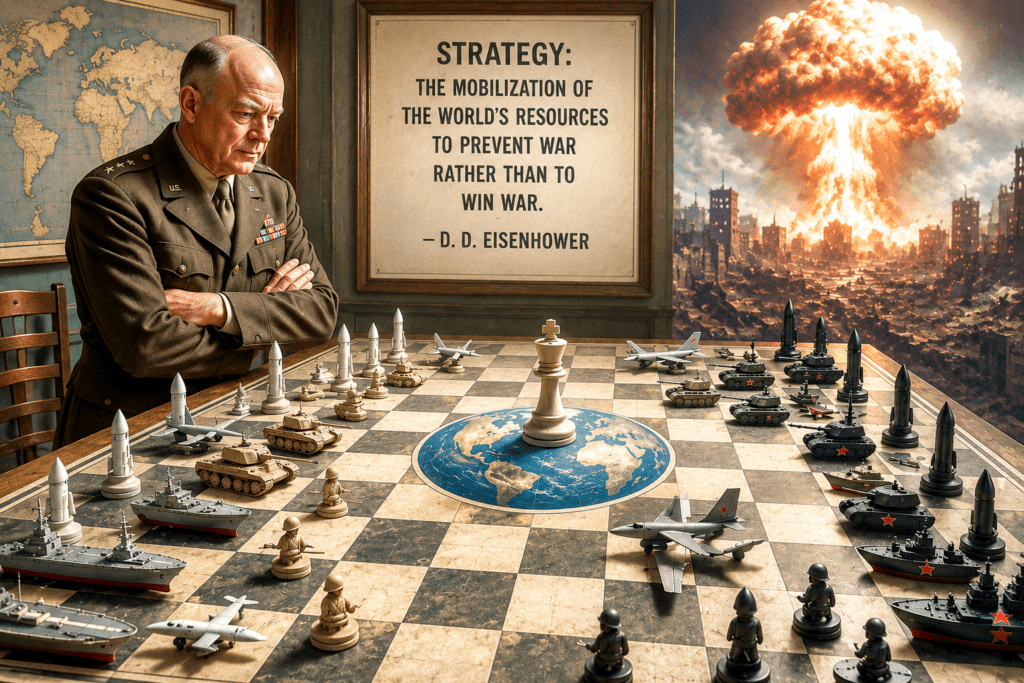
The objective was not merely winning a conventional war after it began.
The objective was to prevent the war from beginning at all.
Eisenhower recognized that each division of soldiers, each tank battalion, each aircraft squadron, and each warship carried enormous costs. Building a conventional force capable of matching the Soviet Union everywhere and at all times would place an immense burden on the American economy. Eisenhower doubted that such an approach represented the most effective use of American resources. Nuclear deterrence offered another path.
Critics questioned whether the United States would actually launch nuclear weapons in response to limited aggression. Supporters argued that uncertainty itself strengthened deterrence. To historians, the policy became known as Ike’s Bluff. If Soviet leaders could not confidently predict where escalation might end, Soviet leaders would have powerful incentives to avoid starting the process in the first place.
Whether one agrees with Eisenhower’s conclusions or not, the intellectual framework remains fascinating. Eisenhower was not primarily asking how America could win each possible war. Eisenhower was asking how America could influence Soviet decision-making before any war began.
In many ways, Eisenhower was applying the same lesson that the Dread Pirate Roberts teaches Vizzini.
Vizzini spends the entire scene trying to determine which goblet contains poison.
Roberts has already changed the game.
Eisenhower sought to do something similar. Rather than endlessly preparing for each conceivable conventional conflict, Eisenhower focused on shaping the strategic environment in which those conflicts might occur. The purpose of American strategy was not merely to win a future world war. The purpose of the American strategy was to convince the Soviet Union that beginning such a war would be irrational.
That distinction sits at the heart of deterrence. Winning a game and preventing a game are not the same thing. Eisenhower increasingly believed that the second objective mattered far more than the first.
Taiwan and the Wrong Game
That brings us to Taiwan.
Much of America’s defense planning focuses on how to fight and win a conventional war in the Western Pacific. Analysts debate ships. Analysts debate missiles. Analysts debate aircraft. Analysts debate industrial capacity, logistics, invasion timelines, and casualty estimates.
Those discussions have value. Military professionals should study military problems. Yet another question deserves equal attention. Are we preparing to win the right game? Or are we making the same mistake Vizzini made?
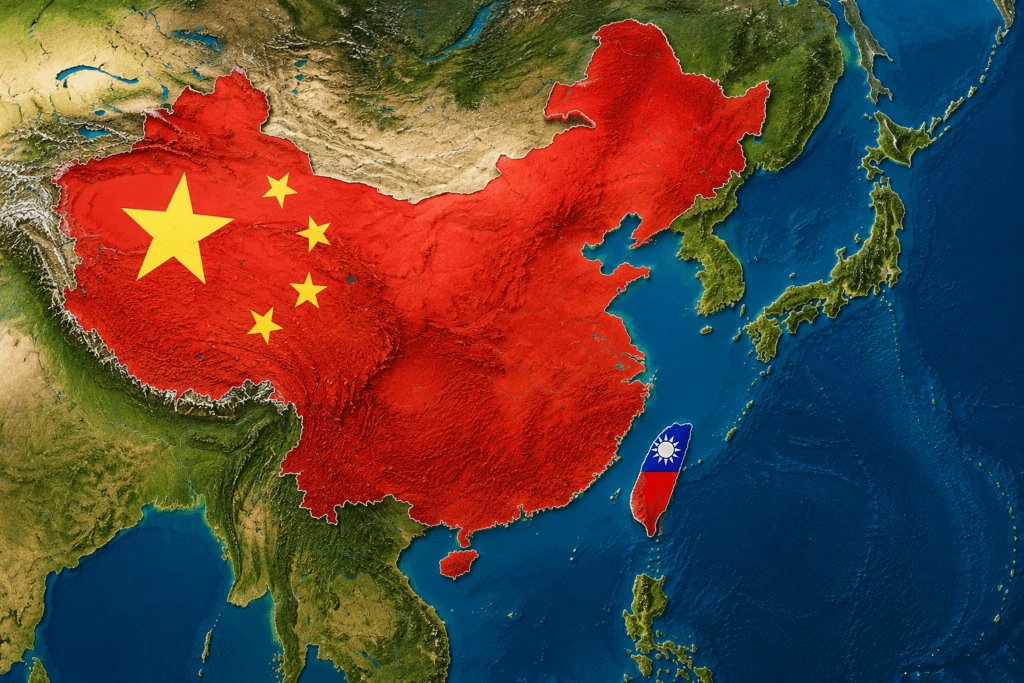
Current discussions often assume that a future conflict would remain largely conventional. The assumption feels natural because conventional military planning is what military organizations do. Yet assumptions deserve scrutiny.
China possesses nuclear weapons. The United States possesses nuclear weapons. Both nations understand the catastrophic consequences of escalation. Both nations understand that the other nation understands. The strategic environment resembles the recursive logic that concerned Eisenhower throughout the Cold War.
If the objective is deterrence rather than conventional victory, then the most important question may not involve ships, aircraft, or missiles at all. The most important question may be psychological. What strategy most effectively convinces Chinese leaders that initiating conflict would be irrational?
That question sits squarely within the realm of Theory of Mind. Deterrence is fundamentally an exercise in understanding how another leadership group perceives risks, rewards, costs, and consequences. The challenge is not defeating an opponent after the game begins. The challenge is shaping the opponent’s decision before the game begins.
Changing the Game
The brilliance of The Princess Bride arrives in the final reveal. Vizzini believes intelligence means climbing ever higher into recursive reasoning. The Dread Pirate Roberts never participates in the contest Vizzini imagines. Months earlier, Roberts had built immunity to iocane powder. The contest was effectively decided before the first goblet appeared.
Vizzini tries to think one move further ahead. Roberts changes the game.
The WOPR discovers that some games cannot be won. Bobby Fischer discovers that predictability becomes a weakness. Eisenhower discovers that preventing a war can be wiser than preparing to fight one. The common lesson is surprisingly simple.
Intelligence matters. Thinking ahead matters. Understanding another mind matters. Yet the highest form of strategy may not be thinking one move further ahead than an opponent. The highest form of strategy may be creating a world in which the opponent never wants to make the first move at all.
Sometimes the smartest move is not winning the game.
Sometimes the smartest move is changing the game entirely.
A Note on Artificial Intelligence and Opinions
This article was researched, outlined, and edited with the assistance of artificial intelligence tools, including ChatGPT. AI also assisted in generating several of the illustrative images accompanying this post. The ideas, arguments, conclusions, mistakes, historical interpretations, questionable analogies involving poisoned goblets, chess grandmasters, and thermonuclear war all remain my own responsibility.
This article reflects my personal opinions and strategic musings as a citizen, reader, researcher, and occasional over-thinker of historical and political questions. Nothing in this essay should be interpreted as professional advice, government policy, military planning, engineering guidance, or the official position of any employer, client, institution, organization, or government agency. Fortunately for everyone involved, no nation currently appears to be basing its defense strategy on my blog.
As always, readers are encouraged to challenge assumptions, question conclusions, and think several moves ahead for themselves.