Chicago gave us more than a weekend memory. Chicago gave us a reminder.
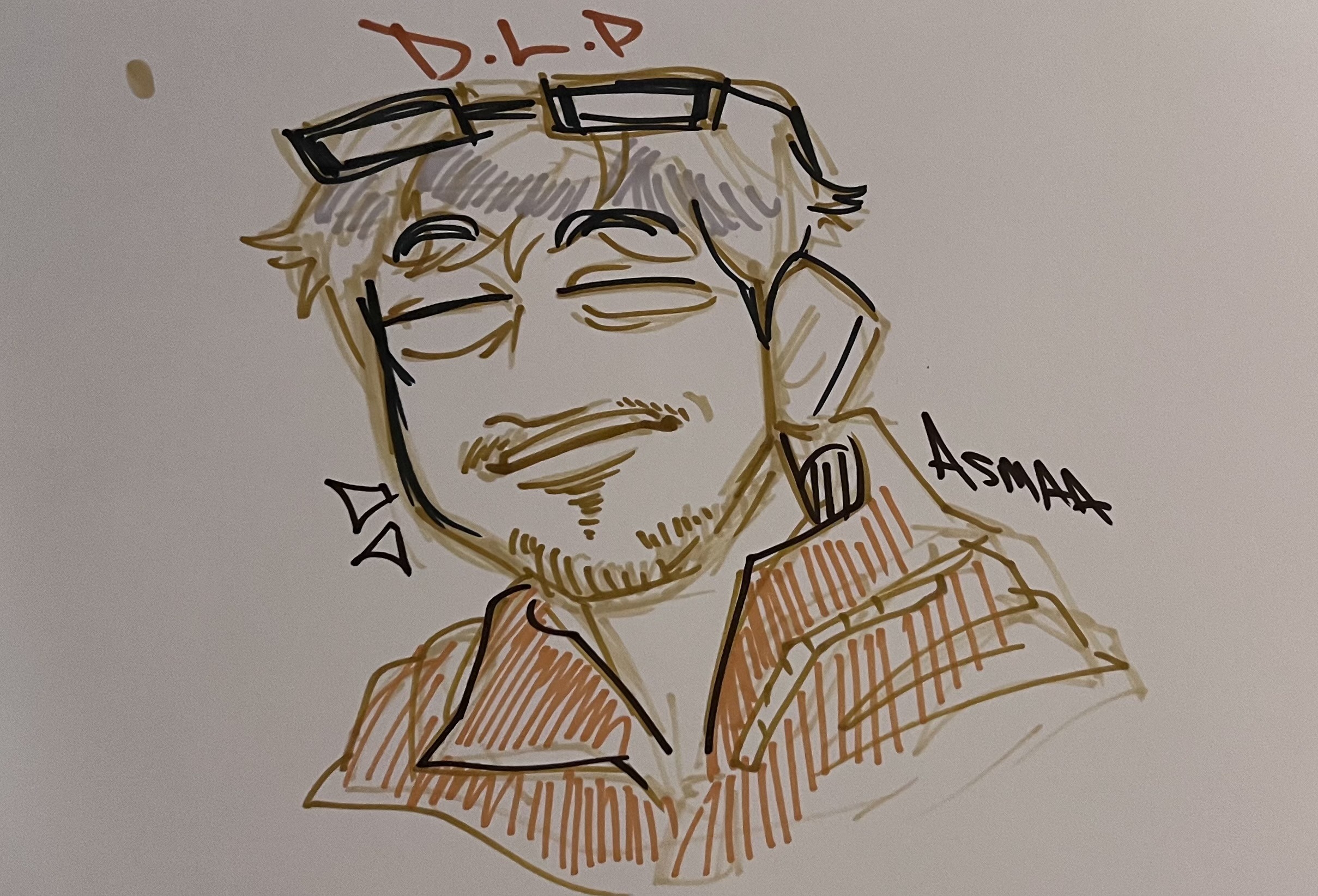
At Trinket Fest, amid the noise of a crowded room, bright tables, hand-lettered signs, and the hopeful energy that gathers wherever young people try to make something beautiful, we met a young artist named Asmaa. She did a quick sketch portrait of me on the spot. Fast lines. Confident hand. A little humor in the expression. A real artist can do that. A real artist can see a face, reduce the clutter, and keep the soul.
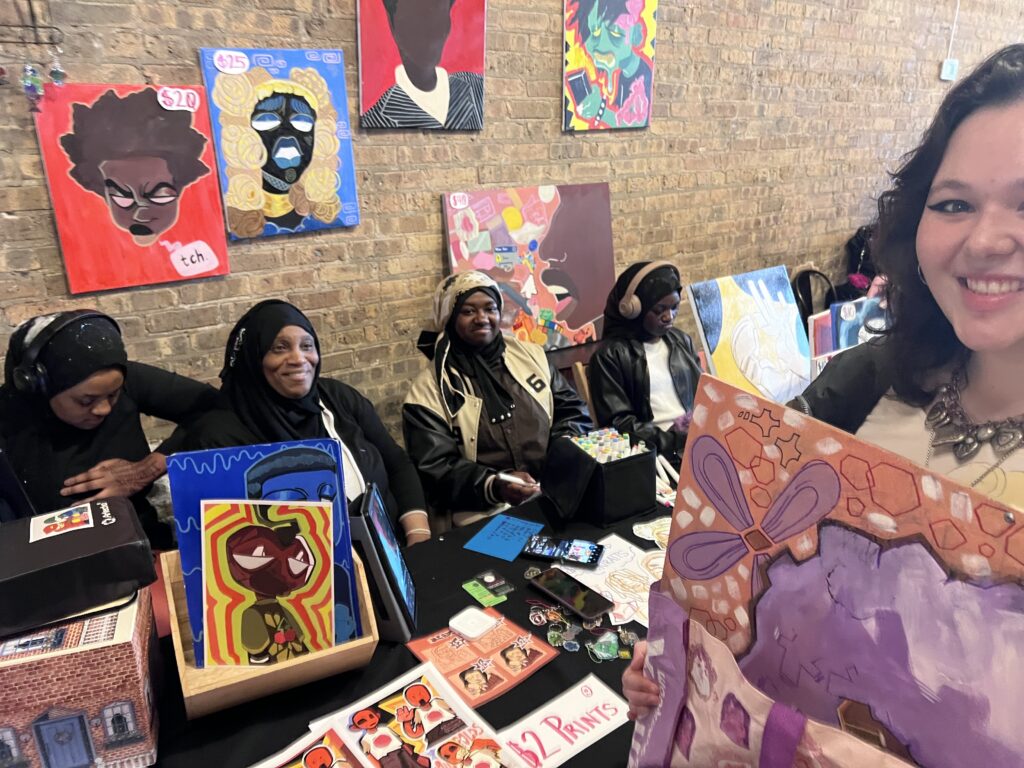
My daughter bought two of Asmaa’s paintings. Those paintings will hang in her dorm room, which feels exactly right. A dorm room ought to have some sign of becoming. A dorm room ought to hold more than cheap storage cubes and mass-produced décor. A dorm room ought to contain evidence of taste, risk, memory, and emerging adulthood. A young artist’s work on a young student’s wall feels like a small act of cultural inheritance.
That small act matters more than many people realize.
The state of art in the United States carries a paradox. Americans still engage with art in large numbers, but the pattern has shifted in ways that should give us pause. The National Endowment for the Arts found that in 2022, 48 percent of U.S. adults attended an arts event in person, 52 percent personally created or performed art, 53 percent read books or literature, and 75 percent consumed art through electronic or digital media. Yet the same survey found a decline in many forms of in-person attendance between 2017 and 2022. Attendance at craft fairs fell from 24 percent to 17 percent. Outdoor performing arts festivals also declined. In other words, art remains present in American life, but direct, embodied, community-based participation has weakened.
That decline should concern anyone who cares about civic life. Screens deliver access. Screens do not fully replace presence. A painting held in the hand, a sketch made while you wait, a crowded room where creators and strangers talk across a folding table—those experiences form a different kind of social fabric. They require patience, attention, and human exchange. They also require somebody to show up and say to a young artist: keep going.
The educational case for encouraging art remains equally strong. The National Endowment for the Arts reported in 2025 that arts education is closely linked with positive academic outcomes and social and emotional development. Another recent NEA report, drawing on longitudinal datasets, concluded that arts exposure is related to higher academic and cognitive outcomes and positive social-emotional attributes. That same report also warned that children’s access to the arts often diminishes as they move from early childhood into formal schooling.
That warning deserves attention. A nation does not lose art in one dramatic collapse. A nation usually loses art by thinning out the places where young people can practice, fail, improve, and be noticed. The first cut arrives in a school budget. The second cut arrives in a family schedule too crowded for lessons or rehearsals. The third cut arrives in the quiet cultural shrug that says art is pleasant, but not necessary.
That shrug is wrong.
Art teaches a young person how to see before speaking. Art teaches discipline without reducing life to utility. Art trains the hand and the eye, but art also trains judgment. A good painter learns proportion. A good musician learns time. A good writer learns precision. A good actor learns sympathy. Beneath each discipline lies a deeper lesson: another person has an interior life, and beauty requires attention to something beyond the self.
Even the hard-nosed economic argument points in the same direction. Americans for the Arts reports that in 2022 the nonprofit arts and culture sector generated $151.7 billion in economic activity, supported 2.6 million jobs, and generated $29.1 billion in tax revenue. Arts activity also spills outward into restaurants, parking, shops, and local business traffic. The arts are not a decorative extra attached to civic life after the serious work is done. The arts are part of the serious work.
Schools still recognize some of that truth, at least in part. NCES reported that in the 2024–25 school year, 73 percent of public schools required students to take at least one arts class, and the most commonly offered courses were music and visual arts. That number offers encouragement, but not license for complacency. Requirement does not guarantee depth. Availability does not guarantee cultivation. Exposure does not guarantee encouragement.
Which brings me back to Chicago.
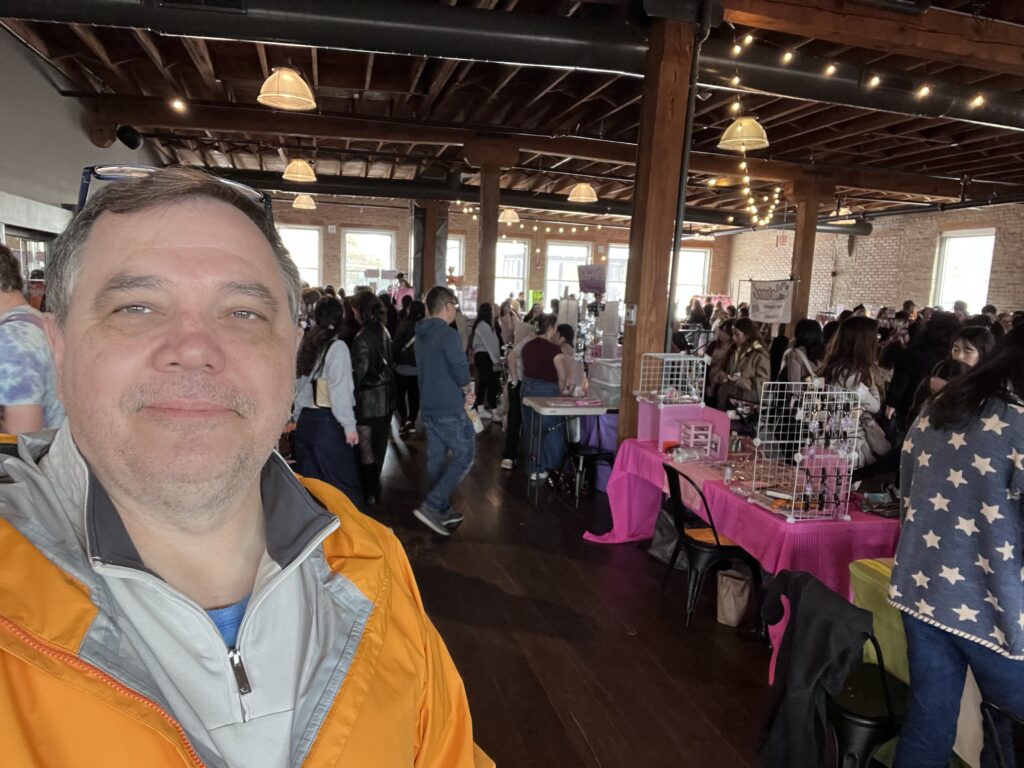
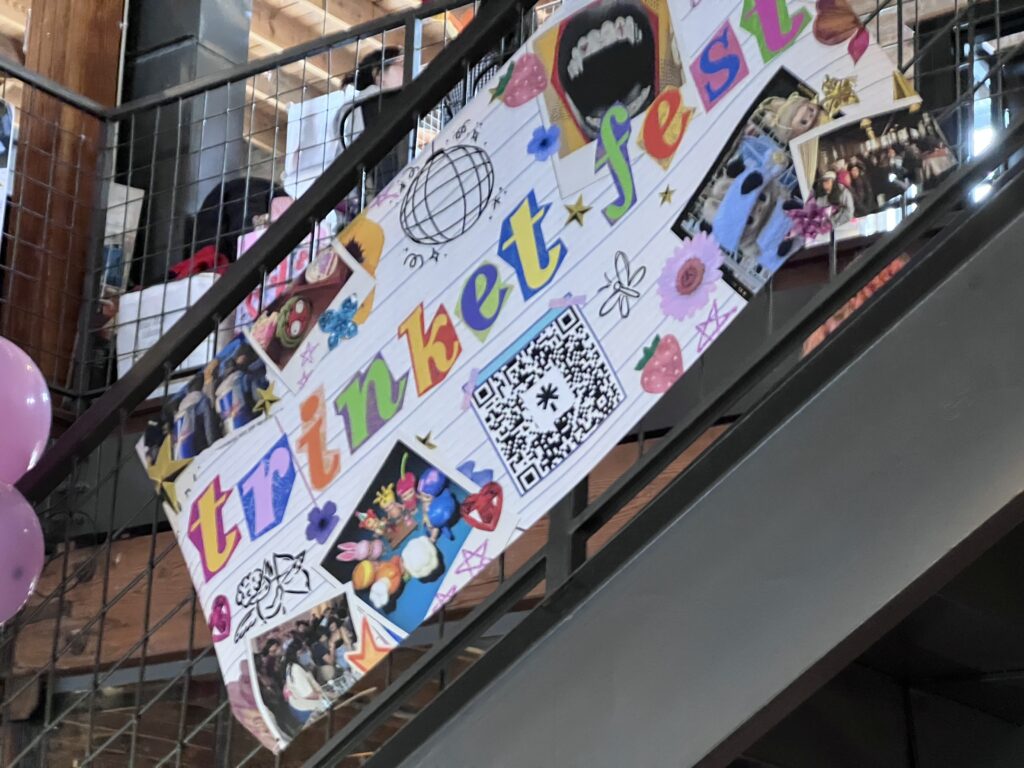
The room at Trinket Fest was alive. One photo catches the crowd and the scale of the gathering. Another shows the handmade festival sign draped along the stair rail, colorful and imperfect in the best way, the sort of sign that announces not corporate polish but human effort. Another shows Asmaa’s booth, filled with bold work and real personality. Then there is the sketch portrait itself—quick, lively, and generous. None of those images look sterile. None of those images feel processed by committee. The whole scene carries the old American virtue of people making things and trying to sell them face to face.
I admire that courage.
A young artist who sets up a table in public is doing more than displaying talent. A young artist is accepting judgment. A young artist is learning presentation, conversation, pricing, taste, rejection, encouragement, and resilience in real time. That education reaches far beyond the canvas. The market teaches part of that lesson. Community teaches the rest.
My family did not leave Trinket Fest with only a sketch and two paintings. My family left with renewed conviction that encouraging young artists matters. Encouragement does not require grand philanthropy. Encouragement can be simple. Stop at the booth. Ask a question. Buy a print. Compliment the work. Tell a young creator that the effort shows. Put original art on a wall instead of another disposable object from a big box store. Choose the human hand over the algorithm, at least once in a while.
Civilizations reveal their priorities by what they preserve, fund, display, and praise. A healthy country does not merely consume culture. A healthy country cultivates makers.
Asmaa gave me a sketch. My daughter gave two paintings a home. Chicago gave us the setting. The larger lesson came from the encounter itself.
Young artists do not merely need audiences. Young artists need adults who notice.
And sometimes the future of art begins with nothing more glamorous than a crowded room, a folding table, a marker in a quick hand, and somebody willing to say yes.