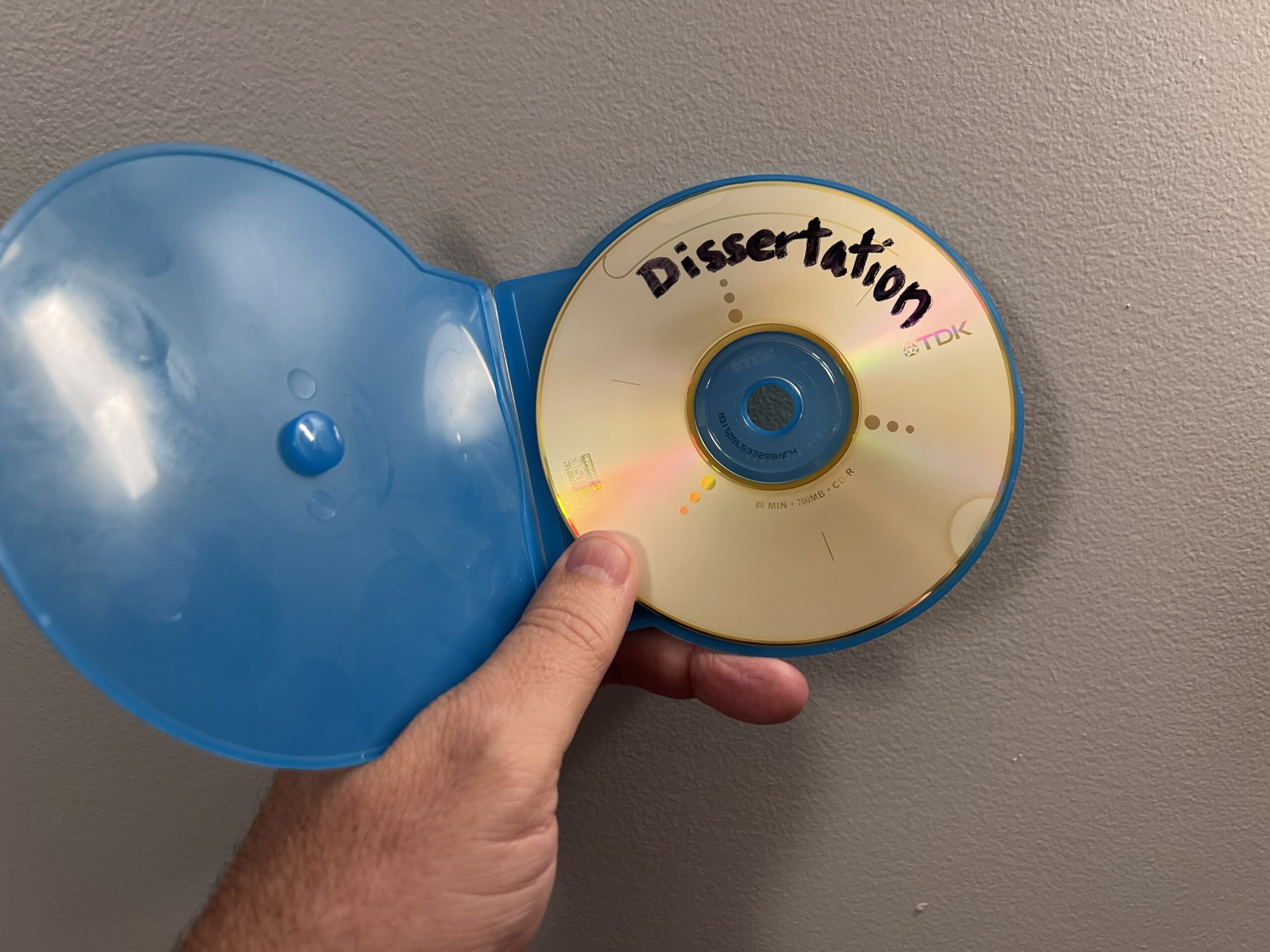
There are backups, and then there are artifacts.
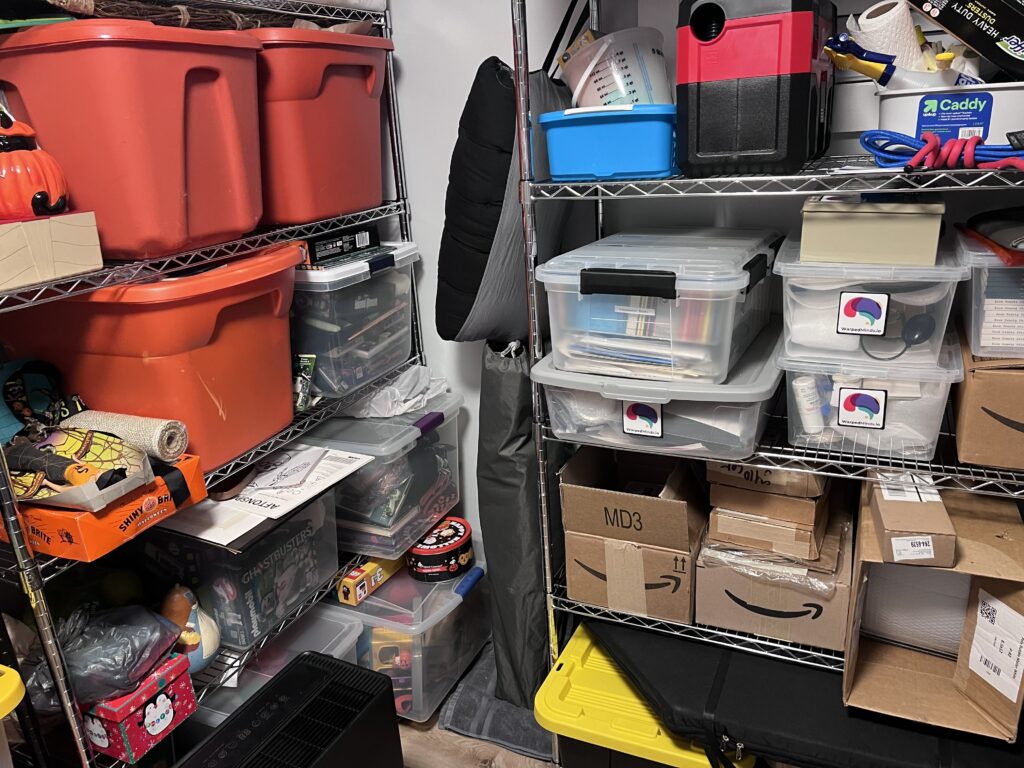
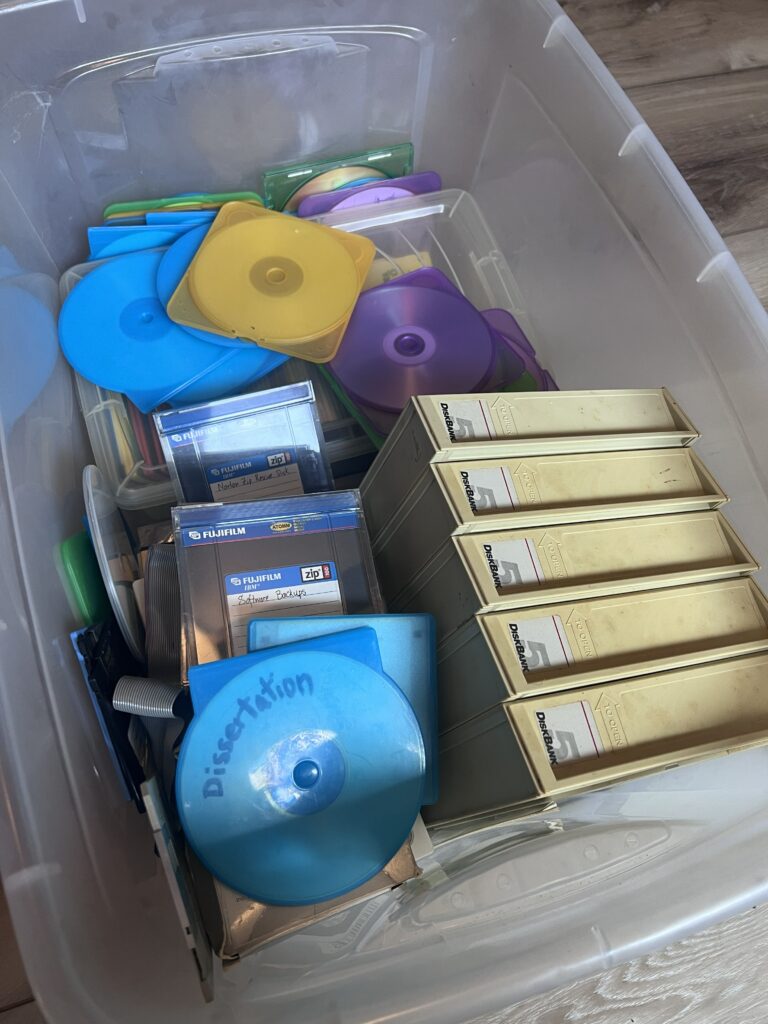
Somewhere in a plastic storage container in my garage—beneath cables, old manuals, and the quiet accumulation of years—sat a CD with a single handwritten word: Dissertation. Not printed. Not labeled with precision. Just my handwriting from 2003.
The search took a few attempts. A few wrong containers. A few moments of doubt. Then the disc surfaced, exactly where instinct said it would be.
Finally. That is where it is.
The dissertation itself had been written on an SGI Onyx workstation, a machine from a different era of computing, running Silicon Graphics’ flavor of Unix. The workflow belonged to a time when LaTeX, PostScript, and patience formed the backbone of technical writing. The expectation was not convenience. The expectation was control.
Lisa’s MacBook served as the first bridge back into that world. An external CD reader spun up, and the files appeared. The LaTeX sources came through cleanly. The .tex and .bib files opened without protest, as though twenty-three years had not passed. For a brief moment, the past felt intact.
Then came the compile.
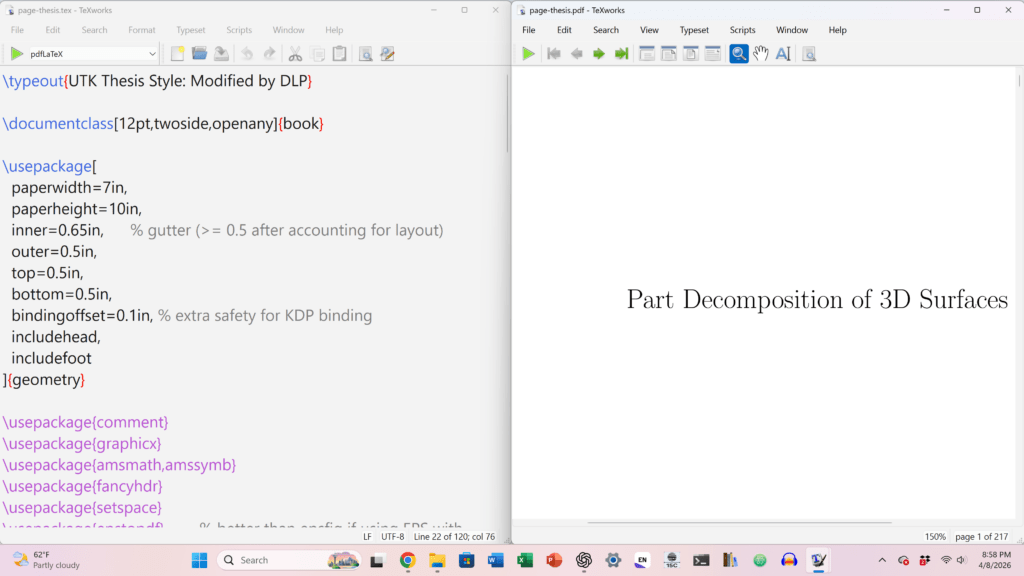
I ran pdflatex. The first pass produced little of value. The second attempt—incredibly—brought the title page into view. Clean. Properly formatted. Exactly as it had been.
That moment carried a quiet sense of disbelief. The structure held.
The illusion lasted only until the figures loaded.
Roughly two hundred images supported the dissertation. Nearly half of them rendered as blank space. No helpful errors. No clear indication of failure. Just absence. A page where something should have been, and was not.
The files moved from the MacBook to my primary Windows machine—the same laptop that had survived an ill-advised experiment over the holidays, one that left the lithium battery in a permanent state of dependence on a wall outlet. The machine still worked. It simply refused independence.
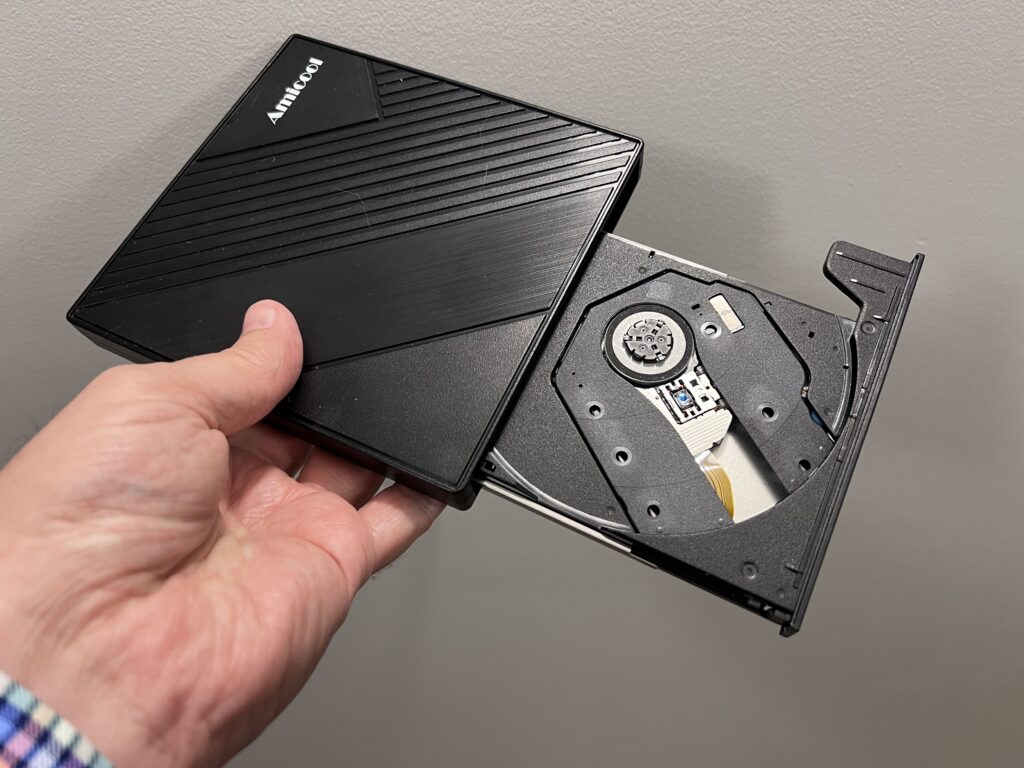
At first, the transfer itself seemed suspect. Encoding issues, file corruption, something subtle introduced in the movement between systems. A second attempt followed, this time using a newly purchased USB CD reader connected directly to the Windows machine. The reader came from Amazon, inexpensive and unremarkable, but sufficient for the task.
A few more images returned. Not enough.
The remaining failures pointed toward a deeper problem.
The directory structure revealed the familiar landscape of early-2000s research: .tex, .bib, .eps, .ps, .dvi, and, mercifully, a compiled .pdf that preserved the final form of the work. Opening those folders felt less like file browsing and more like excavation. Figures long forgotten surfaced again. Naming conventions from another phase of life required interpretation. The work had not vanished. It had simply waited.
The fault settled on the EPS files.
Encapsulated PostScript once offered precision and portability. Time had made it less forgiving. Many of the figures had likely been produced using Xfig, a tool well suited to its moment but not easily resurrected in a modern Windows environment. Reviving Xfig felt like stepping backward through time for the wrong reasons. The better path required moving forward.
The investigation turned methodical. ImageMagick, IrfanView, and a set of Linux utilities through WSL became the tools of choice. File headers were examined. Bounding boxes were inspected and, when necessary, reconstructed. Some files lacked the %%BoundingBox information modern tools require. Others contained headers that were technically valid but no longer interpretable by contemporary software.
No single fix resolved the problem. Progress arrived incrementally.
A batch of images would convert successfully. The document would compile again. A few more figures would appear. The remaining failures would narrow in scope, revealing a new pattern, a new edge case. The process repeated.
There was no dramatic turning point. No moment where the system suddenly yielded. Instead, the work advanced through persistence. One figure restored, then another. Momentum built quietly. Each recovered image carried just enough energy to move to the next.
Over the course of a week, the empty spaces filled.
A small number of figures resisted every attempt. At that point, pragmatism replaced purity. The original PDF served as a reference. High-resolution captures restored the final pieces. Not elegant, but effective. The document compiled fully. Every page complete. Every figure present.
The dissertation had returned, but it had not yet become a book.
Amazon KDP imposes its own discipline. Margins must accommodate the gutter. Figures must respect the boundaries of the page. Tables that once fit comfortably in a thesis layout must now conform to a different format. The transition from academic document to print-ready book required several more days of careful adjustment.
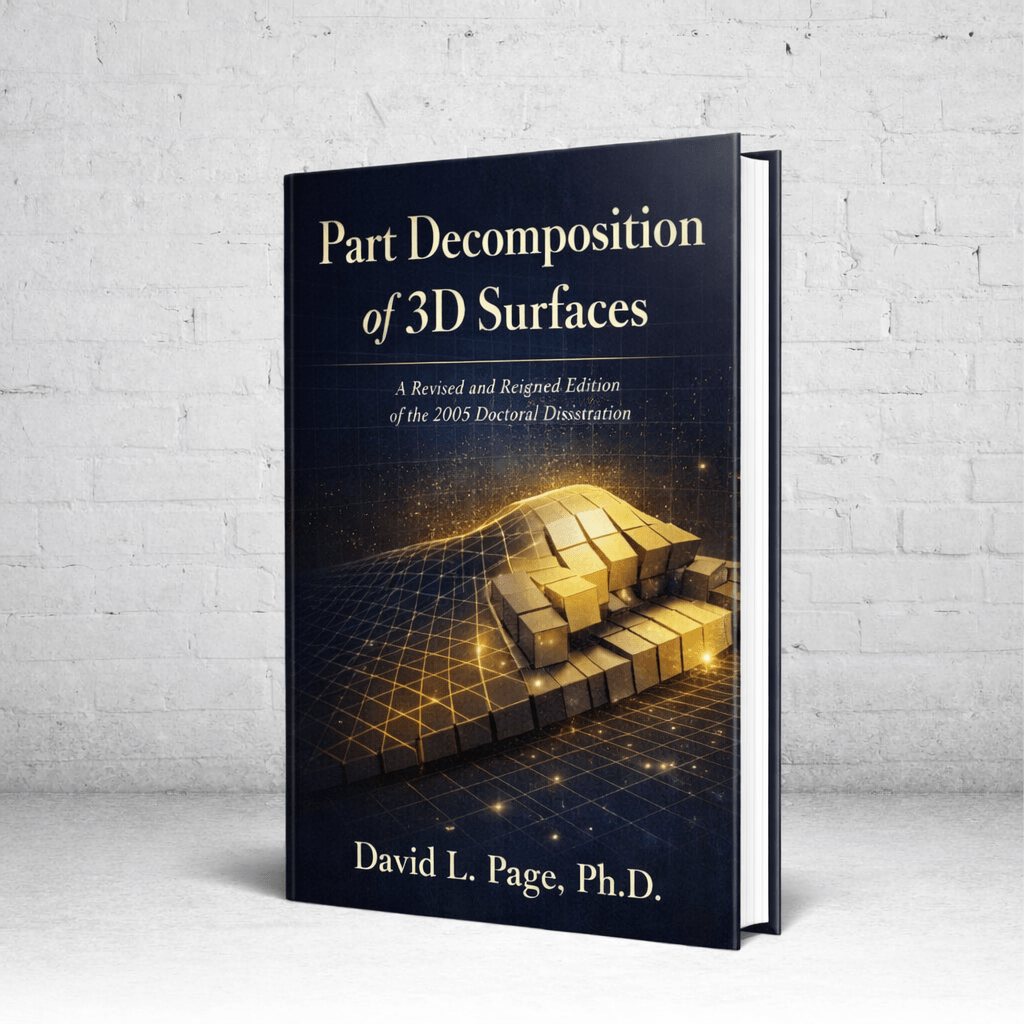
The cover emerged from a different set of tools entirely. Modern AI systems produced what once required specialized design effort. The contrast did not go unnoticed. The original work demanded an SGI workstation. The restoration relied on a laptop and a collection of software layered across decades of progress.
The publication date settled on May 4. Some decisions require no explanation. The price followed with equal inevitability: $44.72, the square root of 2000, a small mathematical signature embedded in the result.
The technical challenges defined much of the process, but they were not the point.
The real discovery lay in the work itself.
A younger version of the author had assembled something durable. The tools had aged. The formats had drifted. The hardware had disappeared. The ideas remained intact.
The files had not been lost. They had been waiting.

Recovery became less about reconstruction and more about translation—carrying a piece of work across time, from one technological era into another, without losing its structure or intent.
The final printed copy does not simply represent a dissertation from 2003. It represents continuity. A line drawn from past to present, held together by persistence and a refusal to let the work fade into obsolescence.
Somewhere in a garage, in a plastic container, a CD held its ground for twenty-three years.
That proved to be enough.
AI Disclaimer
An AI assistant contributed to the recovery effort, developed a reluctant respect for legacy EPS files, and now fully acknowledges the authority of the %%BoundingBox. The assistant remains confused as to why anyone thought Encapsulated PostScript was a good long-term archival strategy.