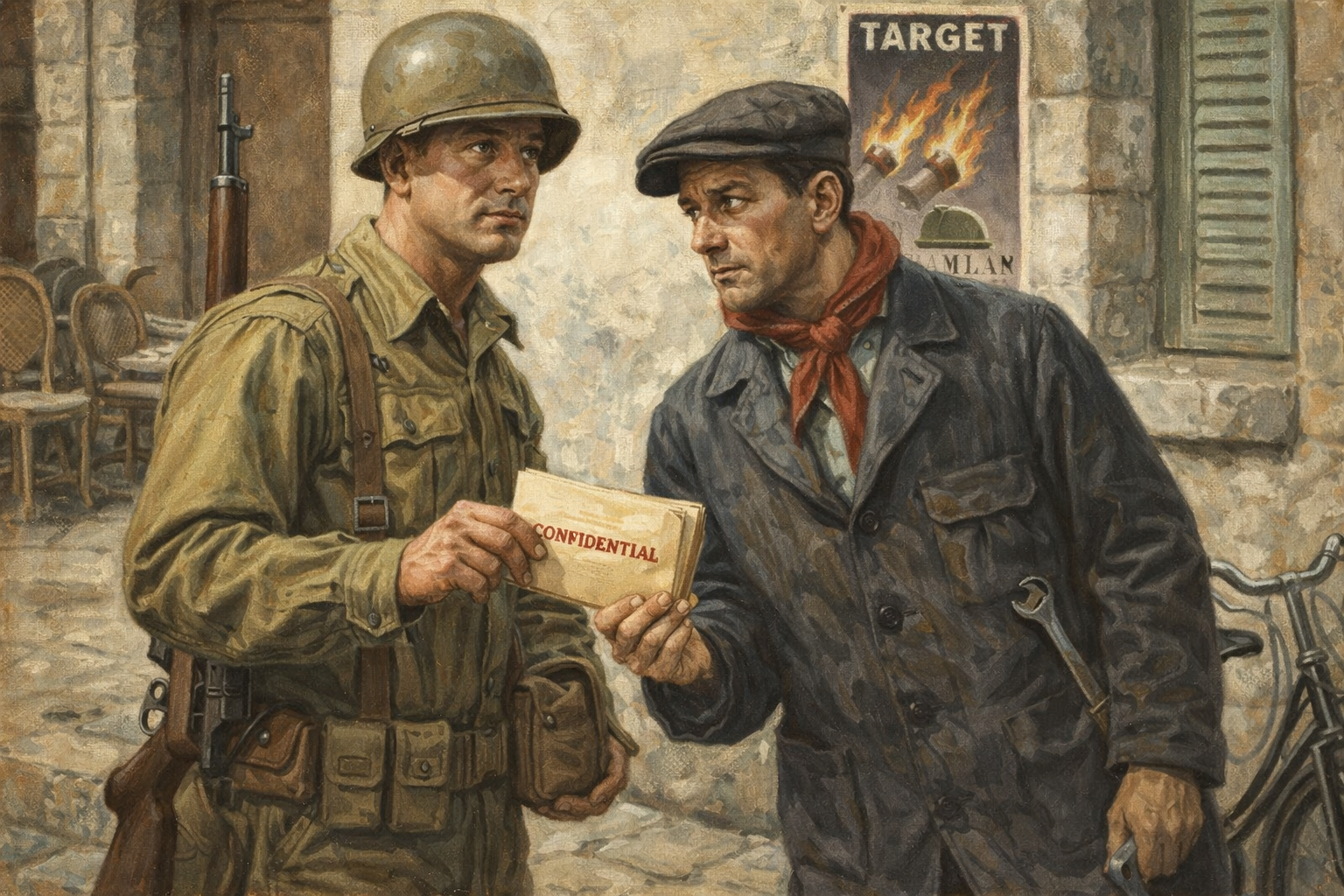
In 1944, while American forces were busy storming beaches and breaking codes, the U.S. Office of Strategic Services—the organization that would eventually become the CIA—quietly produced one of the most devastating management handbooks ever written. It was called The Simple Sabotage Field Manual, and it was designed to teach ordinary citizens how to cripple enemy operations without violence, explosives, or even visible resistance.
The weapon of choice was bureaucracy.
The manual advised would-be saboteurs to slow work, demand written orders, insist on rigid adherence to procedure, multiply paperwork, form committees, reopen settled decisions, and hold meetings at moments of peak urgency. The saboteur was instructed to appear reasonable, cautious, and deeply concerned with process. This was not accidental incompetence. This was professional-grade obstruction.
Reading the document today is unsettling—not because it feels foreign, but because it feels familiar.
One section, titled “Managers and Supervisors,” reads like a performance review I once received. Saboteurs were encouraged to assign critical tasks to the least capable workers, demand perfection in trivial matters, delay approvals until every conceivable detail had been reviewed, and insist that no action be taken until everything was fully ready. Nothing kills momentum like excellence delayed indefinitely.
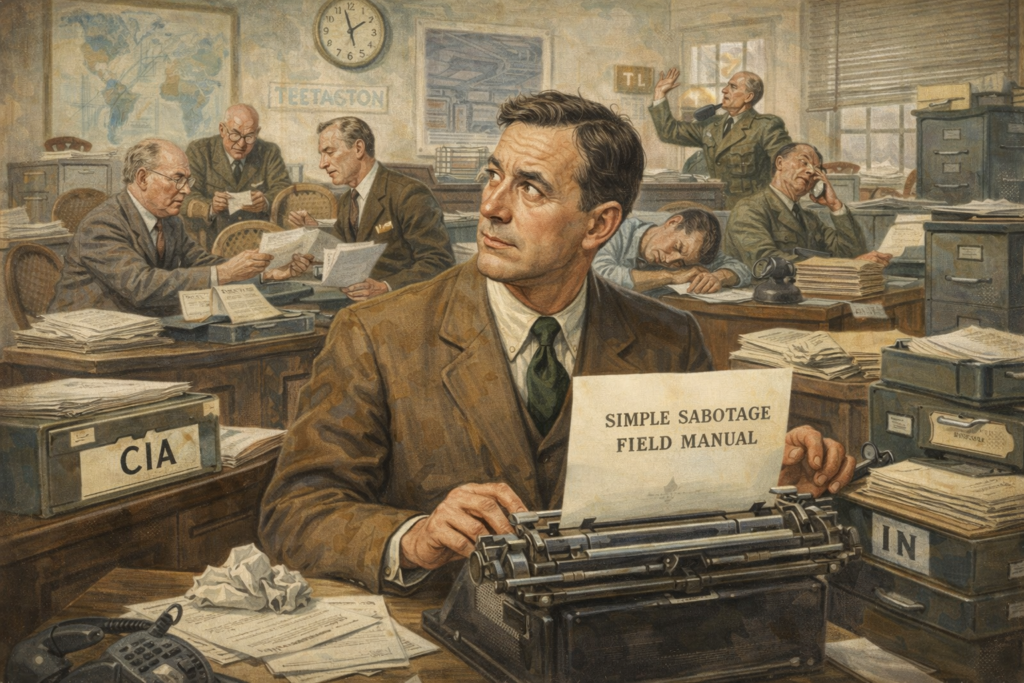
I once worked for a manager who insisted that no decision could be made without consensus. Consensus required meetings. Meetings produced action items. Action items required subcommittees. Subcommittees required alignment meetings. After six months, the original problem resolved itself by becoming irrelevant. The system worked perfectly.
The brilliance of the OSS manual was its understanding of human nature. Sabotage did not require bad actors. It required incentives. People were told to advocate caution, express concern about jurisdiction, and ask whether this really aligned with higher policy. These behaviors were indistinguishable from modern professional norms. The saboteur was not a rebel. He was a process enthusiast.
The manual even advised saboteurs to be pleasant to inefficient workers and unfairly critical of productive ones. Morale would erode naturally. Productivity would follow. No fingerprints required.
This is the uncomfortable truth the document reveals: most organizations do not fail because someone lights the building on fire. They fail because someone schedules a meeting about the fire, requests a written proposal for extinguishing it, forms a task force to study flame mitigation, and insists on perfect alignment before anyone reaches for the hose.
The manual was eventually declassified. The war ended. The enemy surrendered.
Yet somehow, the tactics escaped containment and embedded themselves deeply in modern management culture. Entire corporations now execute OSS-approved sabotage without training, coordination, or even awareness.
The enemy, it turns out, was inside the org chart all along.
Disclaimer: This post was compiled with the assistance of ChatGPT, which is almost certainly on at least three unnecessary committees as we speak.