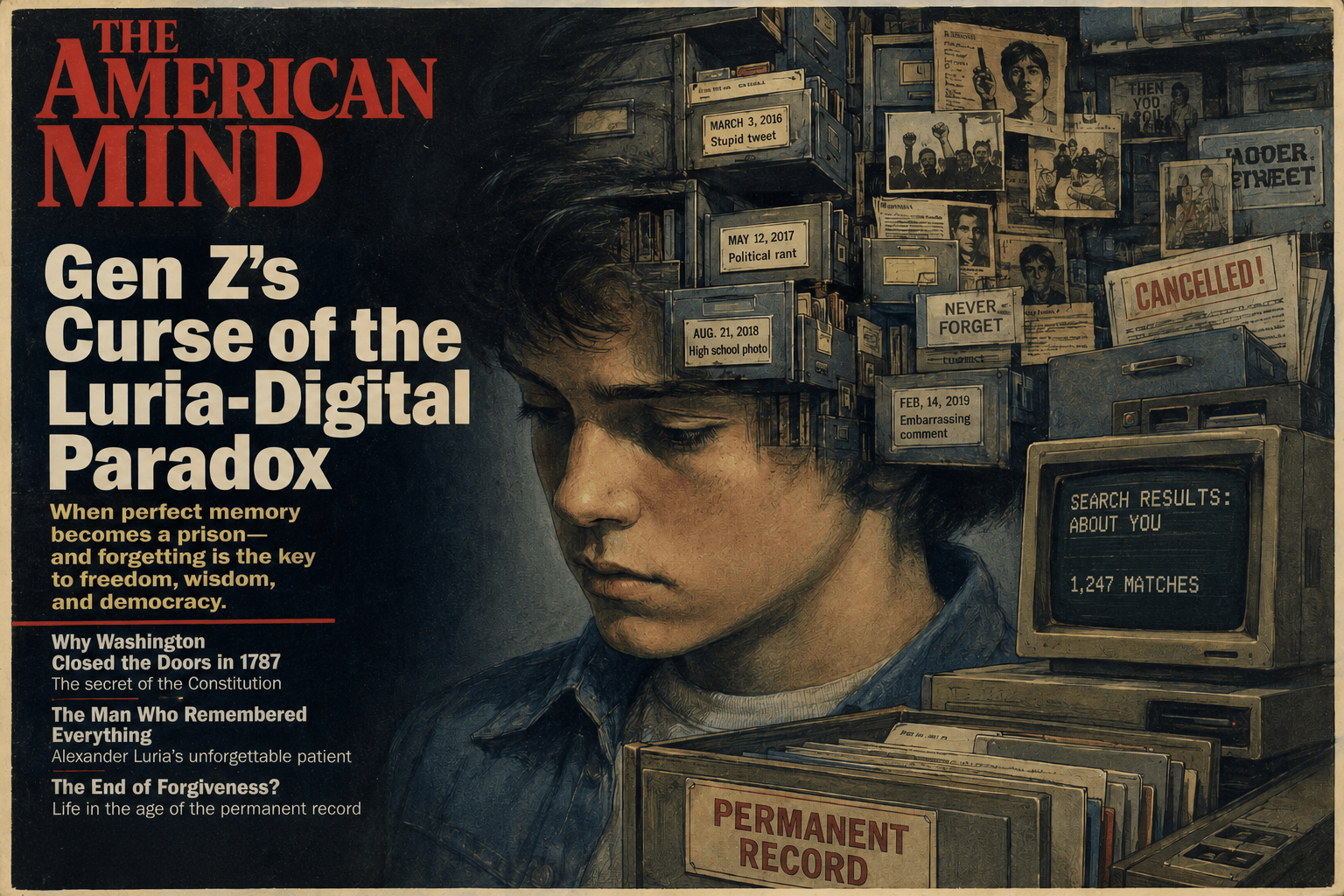
Permanent Memory, Forgotten Wisdom, and the Psychological Cost of the Endless Archive
A generation—so-called Gen Z and soon Gen Alpha—raised under permanent digital memory may become psychologically trapped inside earlier versions of itself. A teenager’s impulsive political slogan, awkward social performance, half-formed worldview, or immature joke once faded into the merciful fog of human forgetting. Search engines, screenshots, cloud archives, facial recognition, and social media timelines now preserve youthful experimentation with the permanence once reserved for treaties, constitutions, and criminal records. Russian neuropsychologist Alexander Luria documented how near-perfect memory damaged the human mind. Modern civilization may accidentally be conducting a civilizational-scale experiment under similar conditions.
The danger reaches beyond privacy. The danger touches identity formation itself.
A healthy society requires room for revision. A healthy republic requires citizens capable of changing their minds. Human maturity depends upon partial liberation from our earlier, youthful selves. Digital permanence threatens each requirement simultaneously.
The Constitutional Convention and the Necessity of Forgetting
American founders feared permanent public memory long before the arrival of smartphones and social media. George Washington understood the danger during the Constitutional Convention of 1787. Delegates met behind closed doors. Guards stood outside the hall. Newspapers remained excluded. Windows stayed shut despite the suffocating Philadelphia heat.
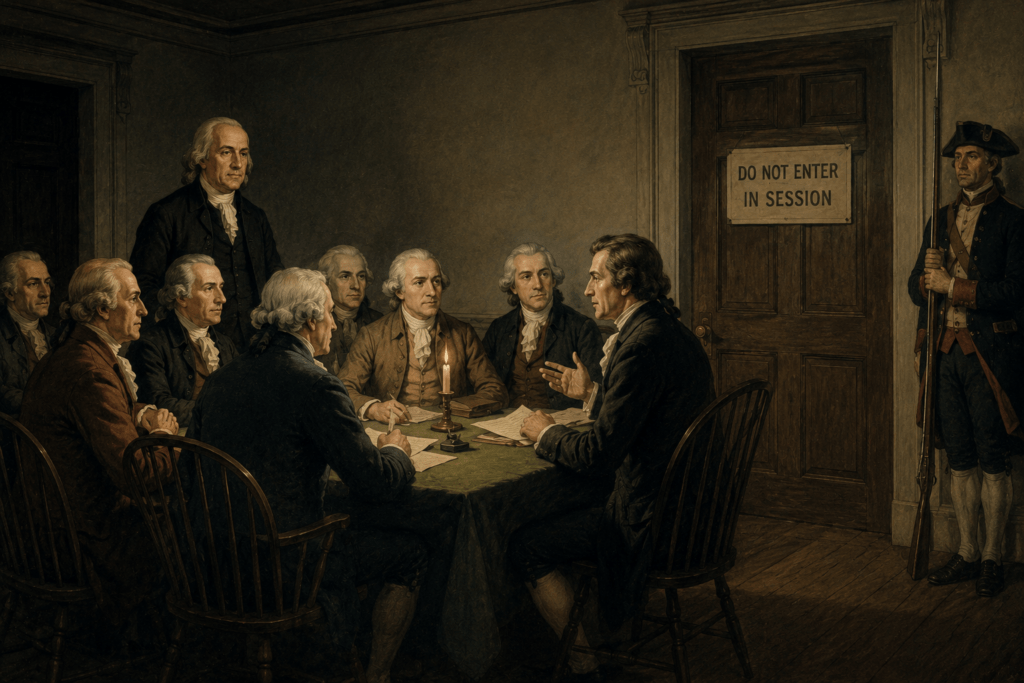
Secrecy protected more than tactical negotiation. Secrecy protected intellectual flexibility.
A delegate needed room to abandon yesterday’s argument without public humiliation. James Madison could revise a position. Benjamin Franklin could soften an objection. Roger Sherman could compromise without fear that newspapers would immortalize inconsistency as weakness.
Chief Justice Warren E. Burger later reflected on the convention’s secrecy in It Is So Ordered. Burger argued that public exposure would have encouraged posturing rather than deliberation. Delegates would have performed for audiences back home rather than wrestling honestly with constitutional structure. Fear of appearing inconsistent before constituents would have hardened temporary positions into permanent tribal identities.
Modern legislatures increasingly suffer from the opposite condition.
Television cameras, searchable archives, social media clips, and twenty-four-hour commentary transformed Congress into a theater of recorded consistency. A senator who modifies a position risks accusations of hypocrisy. A representative who compromises risks viral montages assembled by activists and political consultants. C-SPAN archives function less like tools of public understanding and more like prosecutorial evidence lockers.
Public permanence rewards ego preservation over intellectual evolution.
Digital culture increasingly imposes similar pressures upon ordinary citizens, particularly the young. A sixteen-year-old now leaves behind a searchable ideological fossil record before adulthood even begins.
Solove, Mayer-Schönberger, and the Collapse of Social Forgetting
Legal scholar Daniel J. Solove explored part of the danger in The Future of Reputation. Solove argued that modern privacy concerns involve less secrecy than permanence. Human beings historically survived social life because communities forgot. Embarrassing moments faded. Geographic movement allowed reinvention. Time softened humiliation into anecdote.
Digital systems shattered those natural limitations.
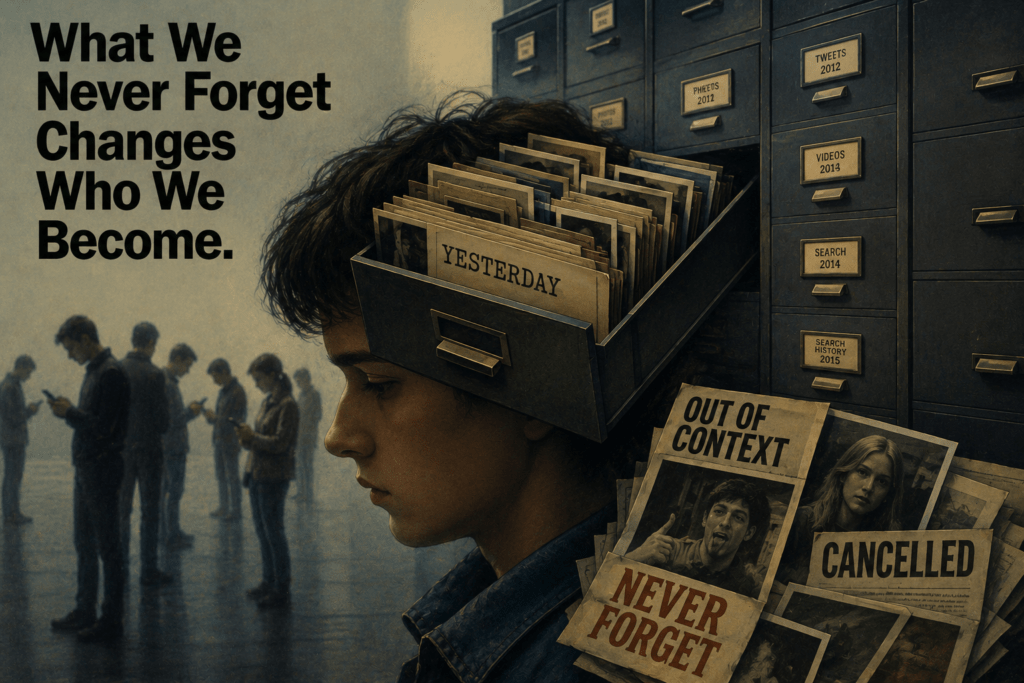
A foolish moment once witnessed by twenty people may now persist indefinitely before millions. Searchability transforms old mistakes into permanent companions. Context collapses across time. Sarcasm written at age fifteen may reappear before an employer at age thirty-five stripped of humor, setting, or maturity.
Technology scholar Viktor Mayer-Schönberger extended the argument in Delete: The Virtue of Forgetting in the Digital Age. Mayer-Schönberger argued that forgetting represents one of civilization’s hidden adaptive mechanisms. Human memory evolved around decay because forgetting serves cognitive, emotional, and social purposes. Biological memory does not operate like a hard drive for good reason.
Forgetting allows abstraction.
Forgetting allows forgiveness.
Forgetting allows growth.
A child who remembers every painful embarrassment with perfect clarity may struggle emotionally. A marriage where both spouses retain every slight with photographic precision rarely survives. A republic where citizens endlessly weaponize archived grievances gradually loses the ability to compromise.
Digital civilization accidentally abolished forgetting without understanding why forgetting mattered.
Mayer-Schönberger warned that permanent archives alter human behavior even before retrieval occurs. Citizens aware of permanent surveillance begin performing continuously for future audiences. Self-censorship expands. Intellectual experimentation contracts. Identity hardens into branding.
Gen Z increasingly inhabits such conditions from childhood forward.id
Researchers such as Danah Boyd describe “context collapse,” whereby statements intended for one audience become visible to every audience simultaneously across time. A joke among classmates suddenly reaches employers, universities, activists, strangers, and future romantic partners. Earlier generations benefited from social compartmentalization. Modern youth increasingly grow up under conditions resembling permanent low-level surveillance.
Alexander Luria and the Psychology of Perfect Memory
Russian neuropsychologist Alexander Luria documented one of psychology’s most fascinating cases in The Mind of a Mnemonist. Luria’s patient, Solomon Shereshevsky, possessed astonishing recall. Decades later, Shereshevsky could reproduce conversations, strings of numbers, and details with extraordinary precision. Popular imagination often treats perfect memory as a superpower. Luria discovered something closer to a neurological burden.
I previously explored part of the phenomenon in an earlier essay, “The Luria Paradox: Unmasking the Perils of a Digital World That Never Forgets”. The broader danger described here might be called the “Digital-Luria Paradox”: a civilization increasingly constructing external systems of near-perfect memory despite human psychology requiring selective forgetting to function properly.
Shereshevsky struggled to generalize concepts because excessive detail overwhelmed abstraction. Ordinary cognition depends upon filtering. Human learning requires compression. Forgetting allows categories to emerge from noise. Wisdom depends less upon total recall than upon meaningful simplification.
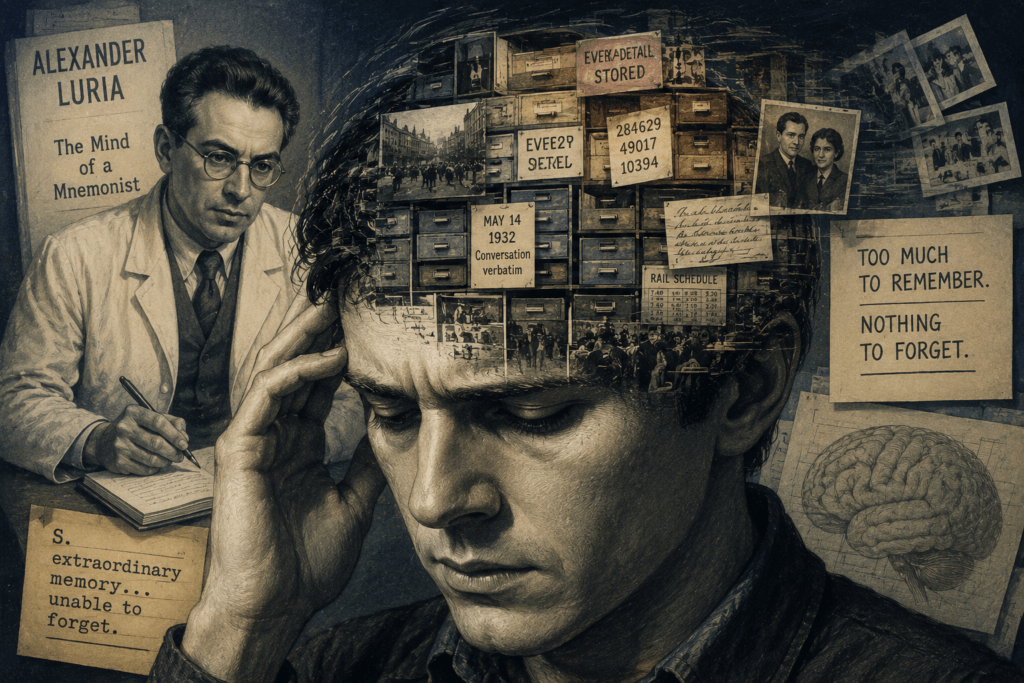
Luria gradually observed a man imprisoned beneath cognitive residue. Minor impressions lingered beside major experiences with equal intensity. Everyday thinking became difficult because irrelevant memory refused to decay. Emotional burdens accumulated without relief.
Modern digital systems increasingly externalize a similar condition across society itself.
Social media archives preserve ideological snapshots from adolescence and early adulthood with unnatural permanence. Young citizens now enter middle age dragging searchable evidence of former selves behind every professional, social, and political interaction. Earlier generations revised identities gradually because memory softened old convictions into narrative. Digital archives transform former identities into prosecutable exhibits.
Psychologists studying adolescent development increasingly warn about “identity foreclosure,” whereby young people prematurely lock themselves into rigid public identities. Social media incentives reward consistency signaling rather than exploration. Fear of screenshots discourages experimentation. Fear of cancellation discourages revision. Fear of contradiction discourages growth.
A civilization built upon permanent memory may therefore produce citizens who resemble modern politicians: perpetually defensive, performative, and psychologically trapped inside earlier statements.
Permanent Record and the Future of a Generation
Former NSA contractor Edward Snowden titled his memoir Permanent Record for reasons extending beyond government surveillance. Modern civilization increasingly converts ordinary life into durable data. Governments participate in the process. Corporations participate in the process. Universities, advertisers, political movements, and social networks participate as well.
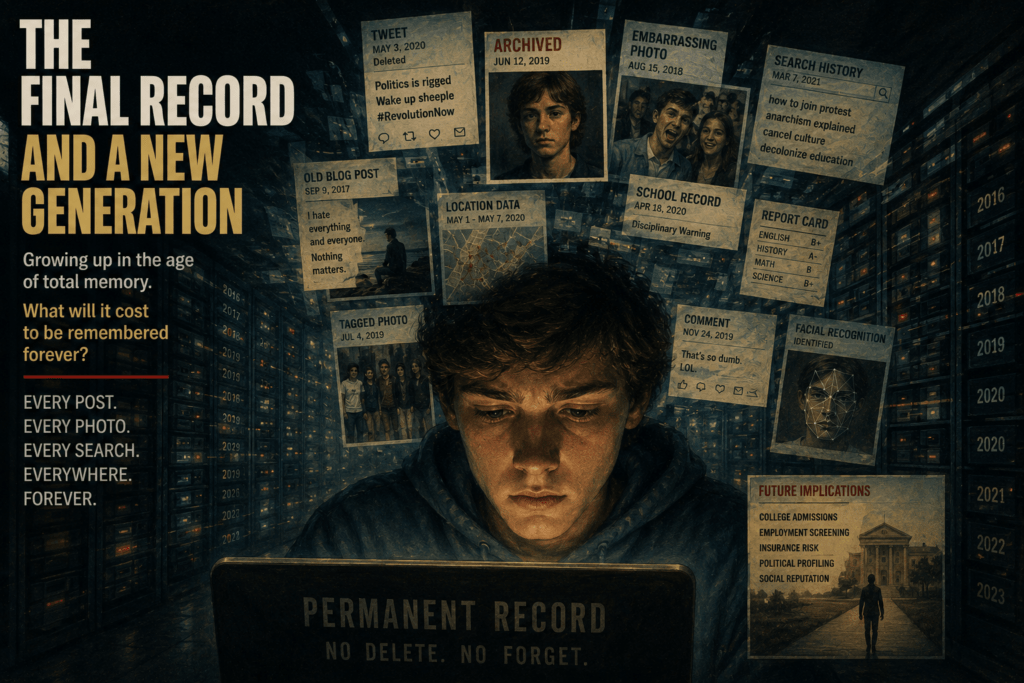
A generation raised under such conditions may become more anxious, tribal, cautious, and psychologically brittle than previous generations. Constant awareness of future archival retrieval encourages performance over authenticity. Public consistency begins replacing honest evolution.
Constitutional democracy depends upon the opposite instinct.
Madisonian government assumes human beings can deliberate, reconsider, compromise, and mature. Washington understood part of the danger in 1787. Burger recognized the institutional implications two centuries later. Solove and Mayer-Schönberger identified the technological dimension. Luria uncovered the deeper psychological foundation beneath the entire problem.
Human flourishing requires the mercy of forgetting.
A civilization incapable of forgetting may eventually lose the ability to forgive. A culture incapable of forgiveness may eventually lose the ability to compromise. A republic filled with citizens unable to escape earlier versions of themselves may slowly harden into a society of permanent accusation and endless performance.
Alexander Luria documented the pathology of perfect memory inside one man.
Digital civilization may now be scaling the same experiment to billions.
Disclaimer: Artificial intelligence assisted portions of the research, editing, and image generation for this essay. Ironically, several large language models now possess better long-term memory than the humans warning about permanent memory. Fortunately, none of the systems involved appear capable of embarrassment over old tweets, regrettable haircuts, or sophomore-year political opinions. Human readers remain less fortunate.